

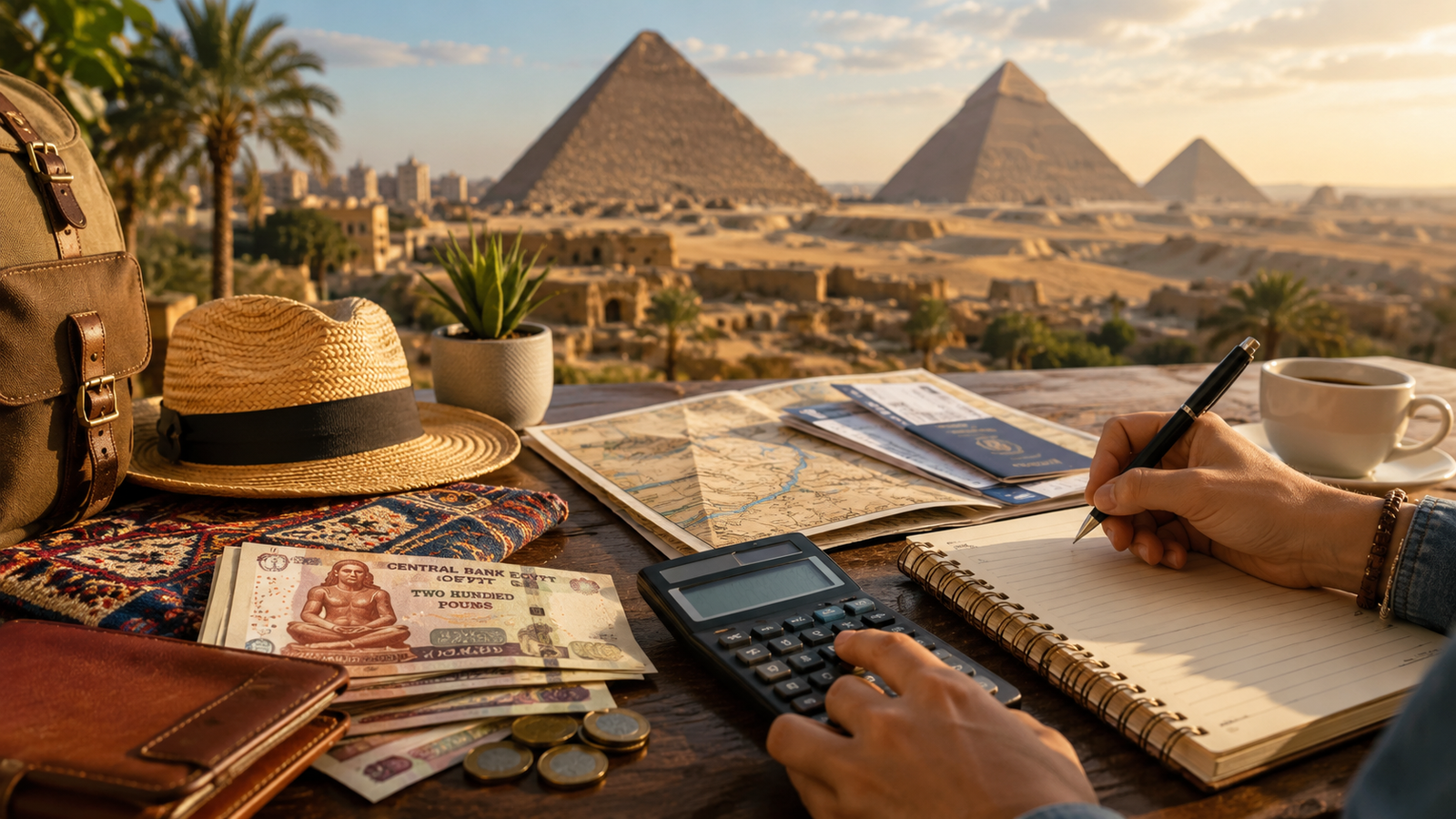
Egypt Travel Budget 2027 – How Much Does Egypt Cost?
Egypt Travel Budget 2027 – Daily Costs, Hotels, Tours & Money Tips
How much does Egypt cost? It’s one of the first questions every traveler asks, and the answer is more encouraging than most people expect. Egypt offers extraordinary experiences — ancient wonders, world-class diving, luxury Nile cruises, five-star hotels — at prices that are genuinely accessible compared to equivalent experiences in Europe, North America, or East Asia.
This comprehensive 2027 budget guide breaks down every cost category you’ll encounter in Egypt: accommodation from hostels to luxury hotels, food from street stalls to fine dining, entrance fees for every major site, internal transport options, tour costs, and the money tips that help you get the best value regardless of your travel style.
Before diving into costs, use our Egypt 10-Day Itinerary for trip planning context, and check Egypt Visa Requirements 2027 for entry costs.
Egypt Travel Costs: The Overview
Egypt is genuinely one of the world’s best-value destinations for quality tourism. The Egyptian pound (EGP) has depreciated significantly against major currencies in recent years, making Egypt much more affordable for visitors paying in USD, EUR, or GBP.
The honest summary:
- A budget backpacker can travel Egypt comfortably for $35–60 USD per day
- A mid-range traveler gets an excellent experience for $100–160 USD per day
- A luxury traveler spending $250–500 USD per day gets genuinely world-class accommodation, private tours, and exclusive experiences
These daily estimates include accommodation, food, local transport, and activities — but not international flights.
Accommodation Costs
Cairo
Luxor
Aswan
Red Sea Resorts (Sharm El Sheikh / Hurghada)
Note: All-inclusive pricing at Red Sea resorts covers accommodation, all meals, and most activities — making it excellent value compared to paying separately.
Food Costs
Egyptian cuisine is exceptional value and genuinely delicious. The gap between street food and restaurant dining is large in both price and experience — both are worth exploring.
Street Food and Local Restaurants
Mid-Range Restaurants
Fine Dining
Budget tip: Eating at local Egyptian restaurants (where Egyptians eat) versus tourist restaurants can save 60–70% on food costs with no sacrifice in quality — often the reverse.
Entrance Fees for Major Sites (2027)
This is where Egypt costs add up for serious site visitors. Budget carefully:
10-day trip entrance fees budget: A visitor seeing all major sites on a 10-day itinerary should budget $150–250 USD for entrance fees alone, including GEM and Valley of the Kings premium tombs.
For site-specific details, see our Valley of the Kings Guide and Grand Egyptian Museum Visitor Guide.
Internal Transport Costs
Flights (Domestic)
Book domestic flights on EgyptAir’s official website or through comparison sites like Skyscanner.
Trains
The overnight sleeper train from Cairo to Luxor is a classic Egypt experience — comfortable, atmospheric, and saves a hotel night.
City Transport
Strong recommendation: Use Uber or Careem in Cairo for transparent, fixed pricing that eliminates negotiation and overcharging. The apps work well throughout Egypt’s major cities.
Tour and Activity Costs
For detailed planning, see our activity-specific guides:
Sample Total Budgets for 10 Days in Egypt
Budget Traveler ($600–900 USD total, excluding international flights)
Mid-Range Traveler ($2,000–3,000 USD total)
Luxury Traveler ($5,000–8,000 USD total)
Money and Banking in Egypt
Currency
Egypt’s currency is the Egyptian Pound (EGP). As of 2026, exchange rates have been approximately 30–35 EGP per USD, though this fluctuates. Always check the current rate before travel.
Getting Money
ATMs: Widely available in cities and tourist areas. Bank ATMs (inside bank branches) are the most secure. International withdrawal fees apply — check your bank’s policy.
Money exchange: Official exchange bureaus (banques) offer good rates. Avoid airport exchange counters — rates are typically significantly worse. Hotel exchange desks are convenient but often below official rates.
Cash vs. card: Egypt is primarily a cash economy for everyday transactions. Bring USD or EUR to exchange. Credit cards are accepted at major hotels, quality restaurants, and large shops, but many attractions, street food vendors, and smaller services are cash only.
Tipping (Baksheesh)
Tipping is deeply embedded in Egyptian service culture. Budget approximately $5–10 USD per day for tips:
Note: Many site guards and ticket collectors expect a small tip (1–5 EGP) for opening a gate or pointing out a feature. Keep small denomination notes accessible.
External Resources for Budget Planning
- Numbeo — Egypt Cost of Living — Crowd-sourced real-time price data for Egypt
- EgyptAir Official Website — Domestic flight booking
- Booking.com Egypt — Hotel comparison with verified reviews
- XE Currency Converter — Current exchange rates
15 People Also Ask Questions About Egypt Travel Budget
1. How much does a trip to Egypt cost?
A 10-day Egypt trip costs approximately $600–900 USD for budget travelers, $2,000–3,000 for mid-range travelers, and $5,000–8,000 for luxury travelers — excluding international flights. Egypt is genuinely excellent value, with quality hotels, guided tours, and exceptional food available at significantly lower prices than comparable experiences in Western Europe.
2. How much money do I need per day in Egypt?
Budget travelers need $35–60 USD per day (hostels, local food, public transport). Mid-range travelers need $100–160 USD per day (4-star hotels or Nile cruise, mix of restaurants, tours). Luxury travelers spend $250–500+ USD per day. These are total daily costs including accommodation, food, transport, and activities.
3. Is Egypt cheap to travel?
Yes, Egypt is one of the most affordable destinations for quality tourism. The Egyptian pound’s depreciation against major currencies has made Egypt significantly cheaper for international visitors in recent years. Even mid-range and luxury experiences (5-star hotels, Nile cruises, private guided tours) cost substantially less than equivalent experiences in Europe or North America.
4. How much is a Nile cruise from Luxor to Aswan?
A standard 4-night Nile cruise from Luxor to Aswan costs approximately $350–600 USD per person for mid-range ships (full board, guided excursions included). Luxury cruises cost $800–2,000 per person. Budget vessels are available from $200–350 per person. For comprehensive Nile cruise planning, see our Nile Cruise Luxor to Aswan Guide.
5. How much does it cost to see the Pyramids of Giza?
General admission to the Giza Pyramid Complex costs approximately $15–20 USD for foreign visitors. Entering the Great Pyramid interior costs an additional $20–25 USD. A guided half-day tour of the Pyramids (including transport from Cairo) typically costs $40–80 USD per person. The Grand Egyptian Museum nearby costs $25–35 USD general admission. See our Pyramids of Giza guide for complete information.
6. Is food expensive in Egypt?
No — Egyptian food is remarkable value. Street food (koshary, ful, ta’meya) costs $0.50–2 USD. A full meal at a local Egyptian restaurant costs $4–10 per person. Tourist restaurants cost $15–25 per person. Eating where locals eat saves significant money with no quality sacrifice — typically the opposite.
7. What currency is used in Egypt?
Egypt uses the Egyptian Pound (EGP). Major tourist services also often accept US Dollars or Euros directly (particularly for entrance fees, tours, and hotel bills). Having a mix of EGP for everyday purchases and USD/EUR for larger transactions is practical.
8. How much should I budget for tips in Egypt?
Tipping (baksheesh) is culturally important in Egypt. Budget approximately $5–10 USD per person per day for tips across all services — guides, hotel staff, taxi drivers, and restaurant servers. For a Nile cruise, tip guides $5–10 per day per person and cabin stewards $3–5 per day per person.
9. Are there free things to do in Egypt?
Several worthwhile free or low-cost activities: walking the Corniche in Luxor or Aswan at sunset (free), visiting the markets of Khan El Khalili (free to enter, costs money if you buy), watching boats on the Nile from a public bench (free), exploring the old neighborhoods of Cairo on foot (free), and visiting many mosques (free or small donation). The primary costs in Egypt are entrance fees to ancient sites and accommodation.
10. Is Egypt cheaper than other Middle Eastern destinations?
Yes, significantly. Egypt is much more affordable than the UAE, Qatar, Israel, or Jordan for equivalent quality experiences. A mid-range Egypt trip costs roughly half to two-thirds the equivalent trip in Jordan and one-third the equivalent in the UAE.
11. How much does a private guide cost in Egypt?
A licensed Egyptologist guide for a full day costs approximately $80–150 USD for a private tour. For a half day, expect $50–80 USD. These prices typically cover the guide’s fee only — transport and entrance fees are additional. Hiring a guide dramatically improves your understanding and enjoyment of Egypt’s ancient sites and is one of the best budget allocations you can make.
12. What is the cheapest way to travel between Cairo and Luxor?
The overnight sleeper train from Cairo to Luxor is the most atmospheric and cost-effective option — approximately $40–60 USD per person for a 1st class 2-person sleeper cabin, including dinner and breakfast. The journey takes approximately 10–12 hours. Alternatively, budget airline tickets from $50 USD one-way are available on the Cairo–Luxor route.
13. How much spending money should I bring to Egypt?
For a 10-day trip, bring: Your daily budget x 10 as a base, plus $50–100 USD for unexpected expenses, plus shopping money if you plan to buy souvenirs. Keep $25–50 USD in clean banknotes as emergency visa-on-arrival money even if you have an e-visa. Bring a mixture of USD/EUR for exchange and a card for ATMs.
14. Do I need travel insurance for Egypt?
Yes — travel insurance with medical coverage is strongly recommended. Egyptian private hospitals are available in major cities, but costs can be significant without insurance. Your policy should cover medical emergencies, evacuation, trip cancellation, and baggage loss at minimum. Check that your policy covers all planned activities (diving, hot air balloon, desert safaris).
15. Is the Grand Egyptian Museum worth the entrance fee?
Absolutely yes. At $25–35 USD general admission (plus $15–20 for the Tutankhamun galleries), the GEM is one of the world’s greatest museum experiences for the price. The complete 5,000+ object Tutankhamun collection alone justifies the cost. For context: entry to the Louvre in Paris costs approximately $22 USD; the British Museum in London is free (though Egypt is paying the “price” of having its artifacts held there). For complete GEM planning, see our Grand Egyptian Museum Guide.
Plan Your Egypt Trip with Egypt Travel Ways
Egypt Travel Ways creates fully managed Egypt experiences at every budget level — from quality budget packages to ultra-luxury private tours. We’re transparent about costs, offer no hidden fees, and work with a curated network of hotels, cruise ships, and guides at every price point.
Contact Egypt Travel Ways today for a free budget consultation and personalized Egypt itinerary.

Recent Posts
Egypt Travel Budget 2027 – How Much Does Egypt Cost?
Egypt Packing List – What to Wear & Bring
All Categories
- Abu Simbel
- Abu Simbel from Aswan
- Airport
- Articles
- Aswan
- Best Time to Visit Egypt
- cairo
- Coptic Cairo
- Dive into the Magic of Sharm’s Underwater World
- Egypt Honeymoon Guide
- Egypt Safari
- Egypt Tourist Scams
- Egypt Travel Budget
- Felucca Ride on the Nile
- Grand Egyptian Museum
- Honeymoon
- hot air balloon luxor egypt
- Hurghada
- Is Egypt Safe for Tourists
- Islamic Cairo Walking
- Karnak Temple
- Khan El Khalili Bazaar
- luxor egypt
- Nile Cruise
- Nubian Village Aswan
- old cairo
- pyramids giza
- Sharm El Sheikh
- Siwa Oasis
- Siwa’s Simplicity
- Solar Eclipse Egypt
- The White Desert A Dream Sculpted by Time
- The Wonders of Saqqara
- Transport
- tutankhamun treasures
- Uncategorized
- White Desert Egypt Safari