Egypt Packing List 2027 – What to Wear, Bring & Leave at Home
Last fact-checked: 1 October 2026. Entry rules, airline baggage policies and protected-area rules can change. Check the requirements that apply to your passport and itinerary shortly before travel.
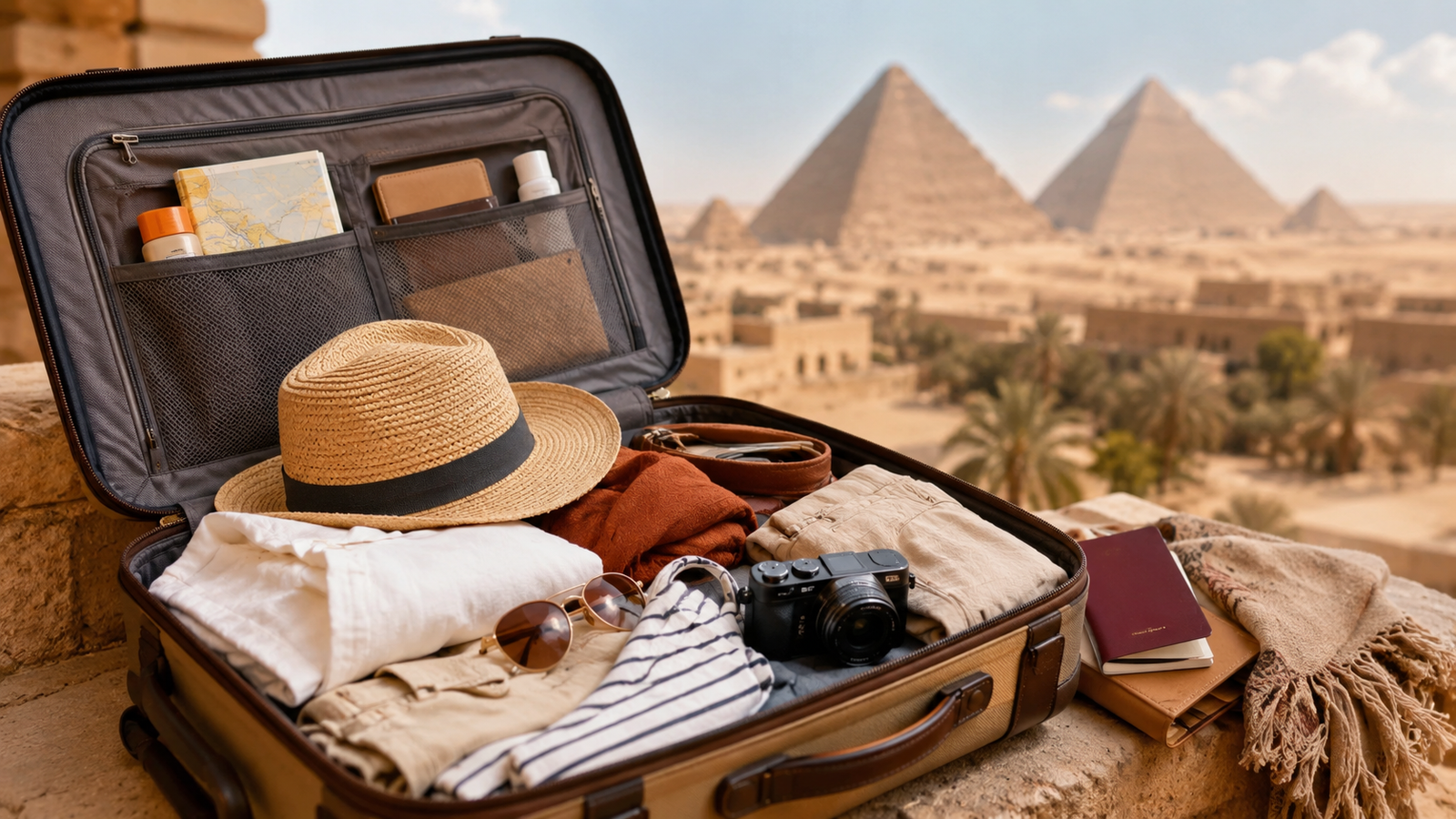
Packing for Egypt requires more thought than a standard beach holiday or city break. The country spans extremes — air-conditioned museums and desert heat, ancient temples and Red Sea beaches, conservative medinas and international resorts, spring wildflowers in the Sinai and dust storms in the Sahara. Add the extraordinary opportunity of the 2027 Solar Eclipse on August 2, and you have a destination that rewards thoughtful preparation.
This comprehensive packing guide covers every category in detail, with specific advice by season, by activity type, and for the special considerations of Egypt’s unique environment. The list is designed to be comprehensive rather than minimal — take what applies to your itinerary and leave the rest.
For trip planning context, see our Egypt 10-Day Itinerary. For specific activity requirements, see our Hot Air Balloon Luxor Guide and Egypt Travel Budget 2027.
The Core Principle: Egypt’s Dual Wardrobe
The single most important packing insight for Egypt is that you effectively need two wardrobes:
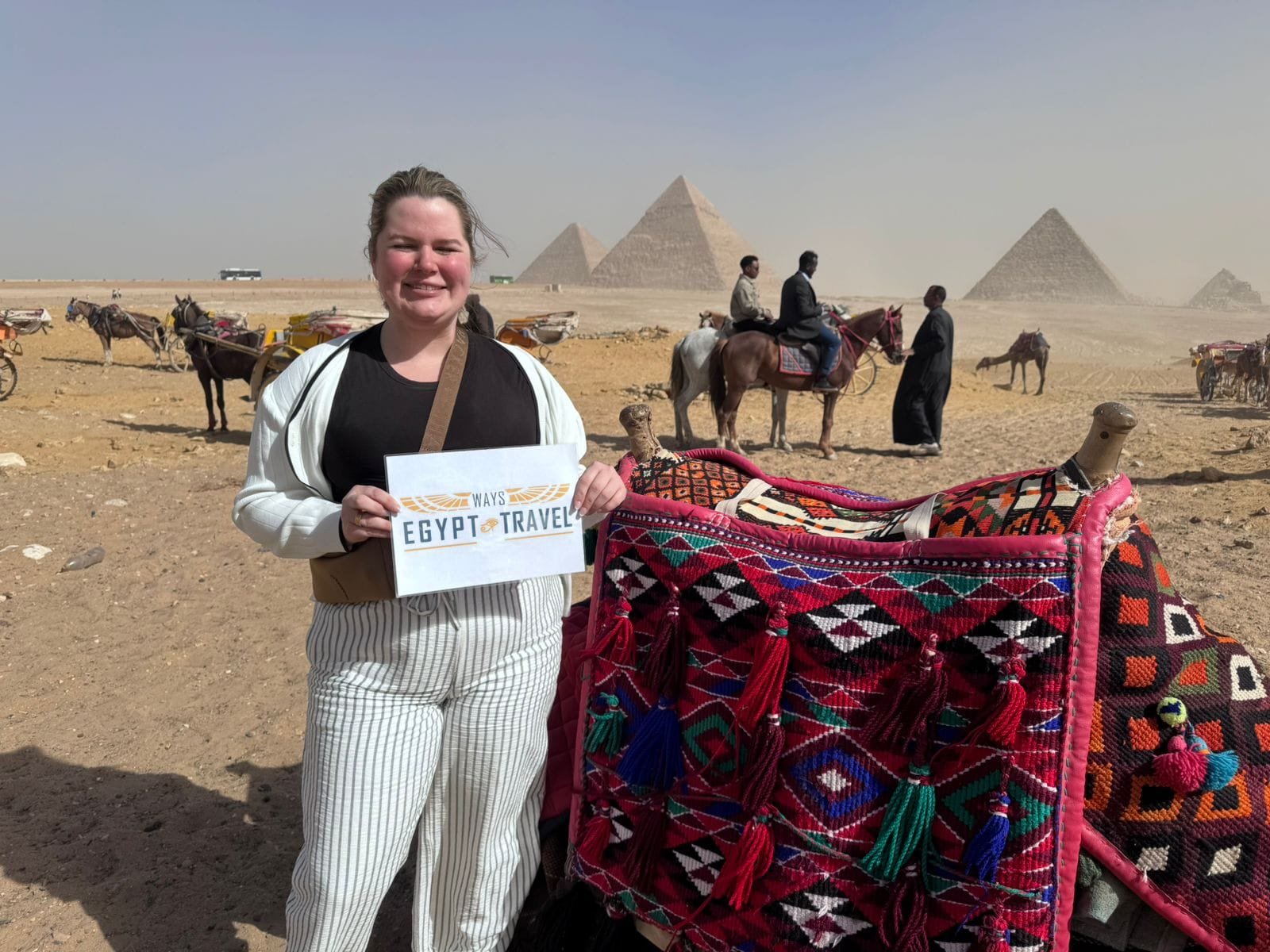
Wardrobe 1 (Cultural/Sightseeing): Modest, lightweight clothing appropriate for ancient temples, mosques, markets, and conservative urban areas. Covered shoulders and knees; breathable natural fabrics.
Wardrobe 2 (Resort/Beach): Standard Western beach and leisure wear for Red Sea resorts, hotel pools, and comfortable evenings.
Many travelers try to bring only one and manage — you can, but having both makes the trip significantly more comfortable and hassle-free.
Clothing: The Complete List
Essential Clothing for Ancient Sites and Cities
Lightweight trousers (2–3 pairs):
The most important clothing item for Egypt. Linen or lightweight cotton trousers that cover the knees are essential for temple visits, markets, and city exploration. They protect from sun, prevent unwanted attention in conservative areas, and keep you cooler than shorts by reducing direct sun on skin.
- For women: Lightweight palazzo trousers or wide-leg linen trousers are comfortable and stylish
- For men: Chino-style travel trousers or lightweight hiking trousers
Long-sleeved tops (3–4):
Covering the shoulders is required at mosques and respectful at most other ancient sites. Light cotton or linen long-sleeved shirts provide sun protection on exposed plateaus (the Giza Plateau, the Valley of the Kings approach) while remaining breathable.
Light layer / thin cardigan or fleece:
Two uses: evening chill (temple sites at dawn or dusk are cooler than midday, and the Nile at night has a breeze) and aggressive air conditioning inside hotels, the Grand Egyptian Museum, and transport vehicles.
T-shirts and lighter tops (3–4):
For less conservative areas, hotel evenings, and hot days when covered already by hat and trousers.
Headscarf (women):
Not required everywhere, but essential for mosque visits (usually available to borrow at the entrance — bringing your own is more hygienic and comfortable) and useful for modest coverage in conservative markets. A large lightweight cotton or viscose square works perfectly and doubles as a towel, beach cover-up, or privacy screen.
Comfortable walking shoes:
This deserves emphasis. The terrain at major ancient sites — the Giza Plateau, the Valley of the Kings, Karnak Temple — is sandy, rocky, and uneven. Trainers or light hiking shoes with good ankle support are ideal. Flip-flops or sandals are genuinely impractical for serious sightseeing. Bring a pair of sandals for resort or hotel use but don’t rely on them for site visits.
Sandals or flip-flops:
For Red Sea resorts, hotel rooms, and casual evenings. Also useful for mosques where you must remove shoes.
Clothing for Red Sea Beach Destinations
Swimwear (2 pieces):
Two swimsuits allow one to dry while the other is worn. At Red Sea resorts, bikinis and swim shorts are completely appropriate. At non-resort beaches and public areas, more modest swimwear is respectful.
Beach cover-up:
A lightweight kaftan, pareo, or long shirt for walking between beach and hotel facilities.
Rash guard or UV-protective top:
Excellent for snorkeling and extended time in the water. Egyptian sun is intense even through water. A lightweight long-sleeved rash guard provides significant sun protection without reducing visibility underwater.
Reef-safe sunscreen:
For Red Sea activities, reduce sunscreen entering the water by using a rash guard, shade and a sunscreen suitable for marine use. Follow any product or environmental rules posted by the protected area or your operator.
Clothing for the 2027 Solar Eclipse (August 2)
If you’re visiting for the solar eclipse, add:
A warm layer you can put on quickly:
Air temperature and perceived warmth can drop during totality. In Luxor in August, a heavy fleece is generally unnecessary for most travelers, but a very light layer can be useful if you are sensitive to temperature changes or spending time in strong air conditioning.
White or light-colored clothing:
Practical for the August heat. Also makes you more visible in any crowds gathering for eclipse viewing.
Sun Protection: Non-Negotiable
Egyptian sun is genuinely dangerous, particularly at the high-altitude desert sites and on the open Nile. Sun-related illness is the most common health issue for tourists at outdoor sites.
SPF 50+ sunscreen:
Bring significantly more than you think you’ll need. A 200ml bottle lasts approximately one week of active daily use at major sites. Quality international SPF brands are available in Egypt but expensive — bring from home.
Wide-brimmed hat:
The most effective single sun protection item. A hat with at least a 7–8 cm brim all around protects face, neck, and shoulders. Baseball caps protect only the face. For women, a floppy straw hat provides coverage and is easy to pack flat.
UV-protection sunglasses:
Essential. Egyptian sun causes rapid squinting, eye fatigue, and long-term UV damage. Look for glasses labeled UV400 or 100% UV protection.
UV-protection lip balm:
Often forgotten. Lips burn and crack quickly in Egypt’s dry desert air and direct sun.
Cooling neck towel or misting spray:
Particularly useful for summer visits or hot days at outdoor sites. Wet, wring out, wrap around neck — provides significant cooling effect through evaporation.
Health and Medical Essentials
Personal medications:
Bring more than you need — prescription medications may be unavailable in Egypt, and a lost bag or extended trip could be problematic. Keep medications in hand luggage.
Oral rehydration sachets (e.g., Dioralyte):
Heat and physical activity in Egypt causes rapid fluid and electrolyte loss. Oral rehydration sachets replenish electrolytes far more effectively than water alone and prevent heat exhaustion. Pack 10–15 sachets minimum.
Antidiarrheal medication (e.g., Imodium / loperamide):
Traveler’s diarrhea is the most common health issue for visitors to Egypt. Not a matter of if but when. Having Imodium or equivalent available prevents it from derailing a planned temple day.
Antihistamines:
Useful for allergic reactions (unfamiliar foods, dust, pollen) and helpful for occasional light sedation on overnight trains or planes.
Hand sanitizer:
Not all ancient sites have soap and water in bathrooms. A small bottle in your daypack is useful.
Blister plasters:
You will walk more than you expect. Even well-fitting shoes cause blisters at ancient sites with uneven terrain. Compeed or equivalent blister plasters can rescue a sightseeing day.
Travel health insurance documents:
Ensure you have your travel insurance policy number and 24/7 emergency contact number accessible. Egyptian private hospitals are available in major cities, but treatment costs without insurance can be significant. The Association of British Insurers (for UK travelers) and the US Travel Insurance Association (for US travelers) have resources for understanding coverage.
Stomach settlers and antacids:
Egyptian food is wonderful but sometimes rich, oily, or heavily spiced for unaccustomed digestive systems. Antacids and stomach settlers prevent minor digestive issues from becoming a problem.
Electronics and Photography
Camera and memory cards:
Egypt is one of the world’s great photography destinations. Bring your best camera, sufficient memory cards (32–64GB per card), and the knowledge that you will fill them. If you rely on a single large capacity card, a card failure loses everything — multiple smaller cards spread the risk.
Camera cleaning kit:
The desert environment is dusty. A blower and lens cloth prevent dust accumulation that can ruin desert photographs.
Power bank / portable charger:
Ancient sites don’t have charging facilities. A power bank keeps your phone and camera charged through a full day of sightseeing. For the solar eclipse, having a fully charged power bank is essential.
Universal travel adapter:
Egypt uses Type C and Type F plugs at 220V. A universal adapter accommodates all device charging.
Solar eclipse glasses (ISO-certified):
If visiting for the August 2027 Solar Eclipse — or even if you’re not specifically there for it but might catch the partial eclipse from other locations — ISO-certified solar eclipse glasses are essential for safe viewing of partial phases. Direct solar viewing without proper certified glasses causes permanent eye damage in seconds. Purchase from a reputable optician or astronomy retailer before travel. Check the American Astronomical Society’s eclipse resources for guidance on safe glasses.
Camera solar filter:
For eclipse photography, a properly rated solar filter for your camera lens is essential for photographing partial phases safely.
Waterproof phone case:
For felucca rides, Nile cruises, and snorkeling photography.
Daypack Essentials
A small, lightweight daypack for daily sightseeing should contain:
Documents and Money
Passport: For the Egyptian e-Visa, the official portal requires at least 6 months of passport validity from the arrival date. For visa information, see our Egypt Visa Requirements 2027.
E-visa printout or digital copy: Present at immigration on arrival.
Travel insurance documents: Policy number and 24/7 emergency line.
Hotel confirmation printouts: Have at least the first night available — sometimes requested at immigration.
USD cash: Clean, undamaged bills for exchange. If you are eligible for visa on arrival and want cash as a backup, check the current fee before departure. As of 1 October 2026, current guidance lists the physical visa-on-arrival fee at approved airports as US$30 cash. Tips are also commonly given in USD.
Credit/debit card: For ATM withdrawals and hotel/restaurant payments.
Money belt: For carrying passport copy, backup cash, and cards at sites where pickpocketing is a consideration (crowded markets, busy sites).
What to Leave at Home
Expensive jewelry: Attracts attention and risks loss or theft. Leave at home.
High heels: Completely impractical for Egypt’s terrain. Every site involves sand, gravel, uneven stone.
Tight or revealing clothing: Fine at beach resorts; inappropriate and counterproductive everywhere else.
Too many clothes: Egyptian hotels provide laundry service. Pack for 5–6 days and plan to do laundry once.
Heavy camera gear without specific purpose: A lightweight mirrorless camera with 1–2 versatile lenses outperforms a heavy DSLR kit for the kind of travel photography Egypt demands.
External Resources
- CDC Travel Health — Egypt — Health recommendations for Egypt travel
- NHS Fit for Travel — Egypt — UK health guidance for Egypt
- American Astronomical Society Eclipse Glasses Safety — Safe solar viewing equipment guide
- Reef-Safe Sunscreen Guide — NOAA — Understanding reef-safe sunscreen requirements
15 People Also Ask Questions About Packing for Egypt
1. What should I pack for Egypt?
Essential Egypt packing includes: lightweight long-sleeved tops and trousers for temple visits (covering shoulders and knees), comfortable closed-toe walking shoes, SPF 50+ sunscreen (more than you think you need), a wide-brimmed hat, a warm layer for cool evenings, your e-visa documents, USD cash for tips and exchange, oral rehydration sachets, and antidiarrheal medication. For a beach element, add swimwear and a rash guard.
2. What should women wear in Egypt?
At Red Sea resorts (Sharm El Sheikh, Hurghada), standard Western beach wear is completely appropriate. At ancient sites, markets, and in Egyptian cities, covering shoulders and knees (lightweight trousers and long-sleeved loose tops) is respectful and reduces unwanted attention. A light headscarf is needed for mosque visits. This isn’t restrictive — light linen clothing is actually more comfortable in the Egyptian heat than exposed skin in direct sun.
3. What shoes should I wear in Egypt?
Comfortable closed-toe walking shoes or light hiking shoes are essential for ancient sites — the terrain at the Pyramids, Valley of the Kings, and Karnak is sandy, rocky, and uneven. Sandals or flip-flops are suitable for Red Sea resorts, hotel rooms, and mosque visits (where shoes are removed), but not for serious sightseeing.
4. Do I need a headscarf in Egypt?
A headscarf is required for mosque visits and is respectful at conservative sites. It’s not required at most ancient temples. For women, carrying a lightweight cotton square (large enough to cover your hair and shoulders) that can be put on quickly is practical. Many mosques provide coverings, but having your own is more hygienic.
5. How much sunscreen should I pack for Egypt?
Pack significantly more than you expect to use. A 200ml bottle lasts approximately one week with active daily site visiting. SPF 50+ is the minimum recommended for the Egyptian sun. Sunscreen is available in Egyptian pharmacies and large stores but quality international brands are expensive — bring from home.
6. What medications should I bring to Egypt?
Essential medications: antidiarrheal (Imodium/loperamide), oral rehydration sachets, antihistamines, pain relief (paracetamol/ibuprofen), antacids, and any personal prescription medications (bring more than needed). Travel health insurance documents should also be accessible at all times.
7. Should I bring USD to Egypt?
Yes. USD cash is useful for: exchanging to Egyptian pounds (good rates at official exchange bureaus), paying some attractions and tours directly, and tipping guides and service staff. Bring clean, undamaged bills — torn or worn notes are often refused. Bring at least $50–100 in USD alongside your regular payment methods.
8. What electronics should I pack for Egypt?
Essential: phone, camera (with extra memory cards), power bank (ancient sites have no charging facilities), universal travel adapter (Egypt uses Type C/F plugs, 220V). For the solar eclipse: ISO-certified solar glasses and a camera solar filter.
9. Do I need ISO-certified solar glasses for the Egypt 2027 eclipse?
Yes, absolutely — if you’ll be anywhere in Egypt during the August 2, 2027 solar eclipse. During partial phases (before and after totality), looking directly at the sun without ISO-certified glasses causes permanent eye damage in seconds. During totality only is it safe to view with naked eyes. Purchase certified glasses from a reputable optician or astronomy retailer before travel. See AAS eclipse safety resources.
10. What should I not bring to Egypt?
Leave at home: expensive jewelry (attracts attention, risks loss), high heels (impractical terrain), tight/revealing clothing for non-resort areas (counterproductive), excessive clothing (Egyptian laundry service makes overpacking unnecessary), and anything of irreplaceable personal value.
11. How should I pack for both beach and ancient sites in Egypt?
The dual-wardrobe approach works best: pack a core of lightweight modest clothing (long trousers, long sleeves) that works for ancient sites, and add swimwear, a rash guard, and beach cover-up for Red Sea elements. Most items (comfortable shoes, hat, sunscreen) serve both parts of the trip.
12. Is sunscreen available to buy in Egypt?
Yes, but quality international brands with high SPF are expensive and not always available outside major cities. Bring sufficient sunscreen from home — particularly SPF 50+ and reef-safe options for Red Sea diving and snorkeling. Generic Egyptian sunscreens are available cheaply but may not meet international SPF standards.
13. What type of luggage is best for Egypt?
A medium rolling suitcase (55–65 cm) plus a small daypack works well for most Egypt itineraries. Avoid over-packing — you’ll be moving between multiple cities and Nile cruise accommodation. Compression packing cubes maximize space. A small lockable daypack for site visits keeps valuables secure.
14. Do I need insect repellent in Egypt?
Insect repellent is useful for Nile cruise evenings and in Aswan, where mosquitoes can be active after dark. It’s less necessary in Cairo, the Valley of the Kings, or desert sites. Bring a small bottle of DEET-based repellent for evenings near the river.
15. What should I pack for a Nile cruise?
For a Nile cruise, pack: lightweight casual clothing for daytime deck and excursions, one smart outfit for dinners, swimwear (most ships have small pools), comfortable walking shoes for temple excursions, sunscreen and hat, a warm layer for cool evenings, insect repellent for dusk, and USD for tipping crew. See our Nile Cruise Luxor to Aswan Guide for complete cruise preparation.
Travel Ready with Egypt Travel Ways
Egypt Travel Ways takes care of the logistics — you just need to pack right and show up. Our team coordinates all the details of your Egypt experience: accommodation, transport, guides, and activities — leaving you free to focus entirely on one of the world’s most extraordinary destinations.
Contact Egypt Travel Ways today to start planning your perfect Egypt trip.