Egypt 10 Day Itinerary 2027 – The Perfect First-Timer’s Route
Ten days in Egypt is the sweet spot for first-time visitors. It’s enough time to experience the country’s most extraordinary highlights — the Pyramids and the Grand Egyptian Museum in Cairo, a Nile cruise between Luxor and Aswan with daily temple visits, the ancient necropolis of the Valley of the Kings, the beauty of Aswan — without feeling hurried. With careful planning, a 10-day Egypt itinerary delivers a complete, deeply satisfying experience of one of the world’s most historically significant countries.
This comprehensive guide provides a day-by-day itinerary, detailed planning advice, accommodation recommendations, insider tips, and honest guidance on getting the absolute most out of your 10 days in Egypt.
Before You Start: Key Planning Principles
Start every day early. Egypt’s ancient sites are best experienced in the morning — before the heat builds and before the tour buses arrive. A 7:00 AM start at the Valley of the Kings feels completely different from a 10:00 AM arrival. This single habit more than any other determines the quality of your Egypt experience.
Book in advance. Quality Nile cruise ships, the best Cairo hotels, and internal flights sell out months ahead during peak season (November–April). For a 2027 trip, especially around the Solar Eclipse period in August, book as early as possible.
Don’t try to do too much. Egypt’s sheer richness of history and monuments can lead to over-ambitious itineraries. Choose quality over quantity — three hours at the Valley of the Kings with a good guide beats rushing through six sites in a day.
Hire guides. Egypt’s ancient sites are significantly richer experiences with a knowledgeable Egyptologist guide. Budget for this — it’s the single best investment you can make in the quality of your Egypt experience.
The Complete 10-Day Egypt Itinerary
Day 1: Arrive in Cairo
Morning/Afternoon: Arrive at Cairo International Airport. Check into your hotel and allow time to settle in and recover from any jet lag.
Evening: Your first evening in Cairo should be spent at Khan El Khalili — the famous medieval bazaar in the heart of Islamic Cairo. This is the ideal introduction to Egypt: narrow, atmospheric alleys, the scent of spices and shisha, the sounds of Arabic music, and the extraordinary energy of Cairo at night. Visit the El Fishawy Café — reportedly open continuously for over 200 years — for traditional mint tea and people-watching.
Where to stay: Giza (near the Pyramids) or downtown Cairo / Zamalek. The Four Seasons First Residence in Giza offers unparalleled pyramid views; the Kempinski Nile Hotel in Garden City offers excellent value and central location.
Day 2: Giza Pyramids and Grand Egyptian Museum
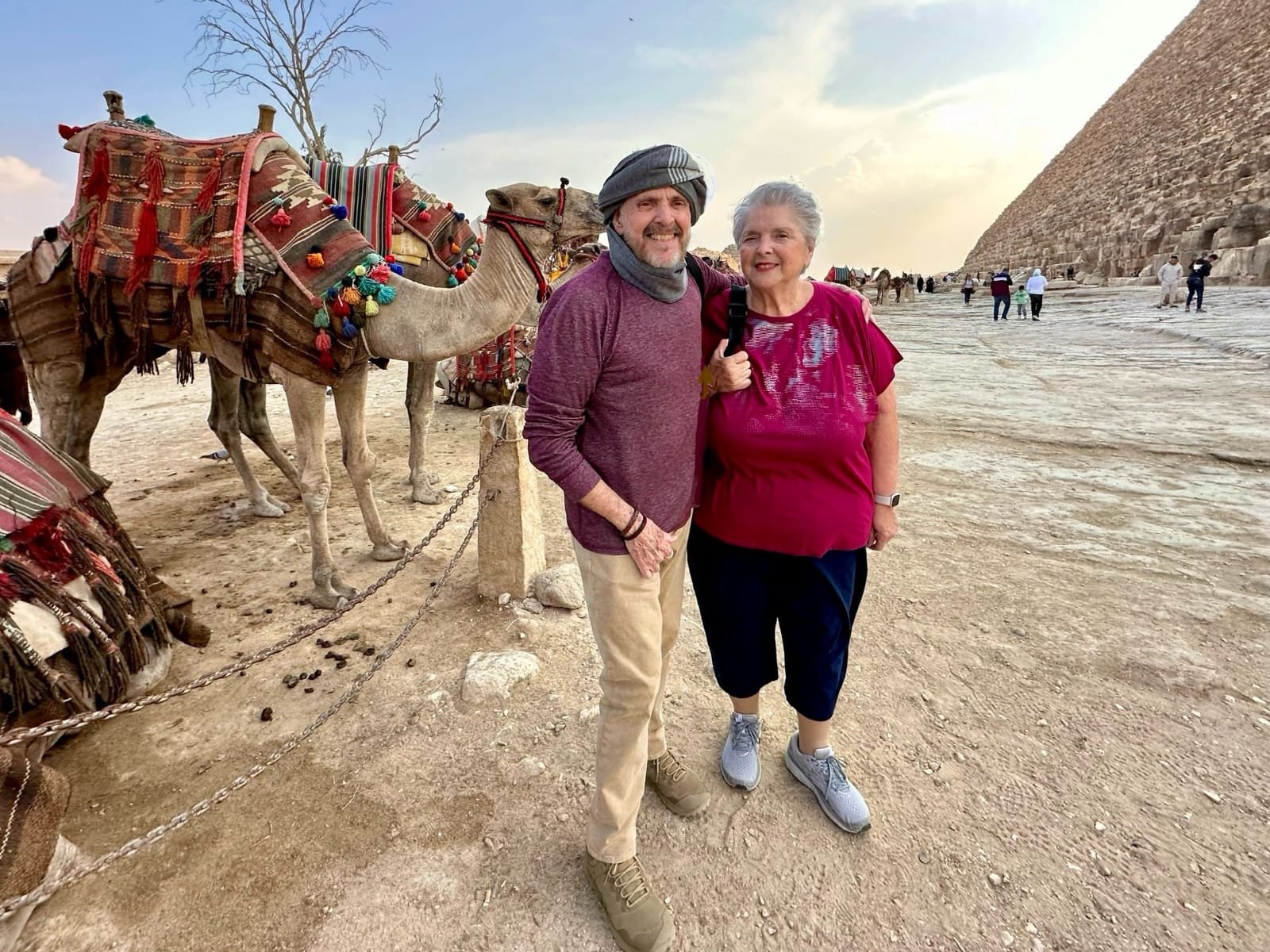
Early morning (8:00 AM): Arrive at the Giza Pyramid Complex right at opening. Spend 3–4 hours exploring the three pyramids, the Great Sphinx, the Valley Temple, and (if desired) the interior of the Great Pyramid.
Photography tip: For the iconic “all three pyramids” shot, arrange a short taxi ride to the Panorama Point at the southwestern edge of the plateau. This is not walkable from the main entrance.
Afternoon (1:00–6:00 PM): Head to the Grand Egyptian Museum (GEM), just 2 km from the pyramids. The world’s largest archaeological museum houses 100,000+ artifacts including all 5,000+ treasures of Tutankhamun. Allow a minimum of 3 hours; the Tutankhamun galleries alone deserve 1.5–2 hours.
Evening (optional): The Sound and Light Show at the Pyramids begins after dark. English-language shows run several evenings per week — a spectacular audio-visual experience with the illuminated pyramids and Sphinx as backdrop.
Day 3: Islamic Cairo, Coptic Cairo, and the Egyptian Museum
Morning (9:00 AM–1:00 PM): Islamic Cairo
- The Citadel of Saladin — the medieval fortress commanding the Cairo skyline, containing the magnificent Mosque of Muhammad Ali (the Alabaster Mosque)
- Sultan Hassan Mosque and Madrasa — considered one of the greatest examples of Islamic architecture in the world
- Al-Azhar Mosque — one of the oldest universities on Earth and the center of Sunni Islamic scholarship
Afternoon (2:00–5:00 PM): Coptic Cairo
- The Hanging Church (Al-Muallaqah) — Cairo’s most famous Coptic church, built on the towers of a Roman fortress
- Coptic Museum — the world’s largest collection of Coptic Christian art
- Ben Ezra Synagogue — one of the oldest synagogues in Egypt, according to legend built on the site where the baby Moses was placed in the rushes
Evening: Dinner on the Nile — many Cairo restaurants offer Nile-view terraces or floating restaurant experiences. The Sequoia restaurant on the north tip of Zamalek Island is a local favorite.
Day 4: Fly to Luxor — West Bank Afternoon
Morning: Take a 1-hour flight from Cairo to Luxor (multiple daily flights). Arrive in Luxor late morning.
Afternoon (1:00–5:00 PM): Luxor West Bank
After a quick hotel check-in, head directly to the West Bank for an afternoon at Egypt’s greatest concentration of ancient monuments:
- Valley of the Kings (2–2.5 hours): Enter 2–3 royal tombs. The Tomb of Ramesses VI (extra ticket) has the most spectacular painted ceiling in the valley.
- Hatshepsut Temple / Deir el-Bahari (45 minutes): The spectacular mortuary temple of Egypt’s most famous female pharaoh, carved into dramatic limestone cliffs.
- Colossi of Memnon (15 minutes): Two massive 18-meter stone statues — a classic photo stop.
Evening: First sunset view of the Nile from the Luxor Corniche. Dinner at one of Luxor’s excellent Nile-view restaurants.
Day 5: Luxor East Bank — Board Your Nile Cruise
Morning (7:00–10:00 AM): Karnak Temple
Arrive at the largest ancient religious complex ever built right at opening. The Great Hypostyle Hall — 134 columns, the tallest reaching 23 meters — is among the most awe-inspiring spaces in human history. Allow 2 hours minimum; hire a guide.
Late Morning (10:30–12:30 PM): Luxor Temple
Walk along the newly excavated Avenue of Sphinxes connecting Karnak to Luxor Temple. The temple itself is beautifully proportioned and features the famous obelisk of Ramesses II (its twin now stands in the Place de la Concorde in Paris).
Afternoon (2:00 PM): Board Your Nile Cruise Ship
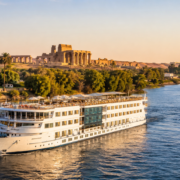
Check in to your cabin, enjoy lunch on deck, and watch Luxor disappear behind you as your ship sets sail southward. The Nile between Luxor and Esna is extraordinarily beautiful — agricultural fields, palm trees, and fishing boats drifting in afternoon light.
Evening: First dinner aboard ship. Evening entertainment typically includes Egyptian music and dance performances.
Day 6: Edfu and Kom Ombo Temples
Morning (7:00–9:00 AM): Esna Temple (Optional)
Many cruises make a brief stop at Esna for the Temple of Khnum. Worth 45 minutes if included in your itinerary.
Mid-Morning (9:30–11:30 AM): Temple of Horus at Edfu
The best-preserved ancient Egyptian temple in existence. Arrive by horse-drawn carriage from the ship dock. The enormous entrance pylon, the sacred lake, the inner sanctuary — Edfu gives you the most complete sense of what an ancient Egyptian temple originally looked like and how it functioned.
Afternoon (3:30–5:00 PM): Kom Ombo Temple
As your ship rounds the Nile bend and the double temple of Kom Ombo comes into view reflected in the water, you’ll understand why this is one of the most scenic moments of the entire cruise. Visit in the late afternoon for the best light and stay for the temple’s beautiful evening illumination.
Evening: Sail toward Aswan. Watch the sun set over the desert as the Nile narrows and the landscape becomes more dramatic.
Day 7: Aswan — Philae, High Dam, and Felucca
Morning (8:00–10:00 AM): Aswan High Dam
A 30-minute visit provides context for one of the 20th century’s most consequential engineering projects — the dam that ended the annual Nile flood cycle, generated electricity for Egypt, and created Lake Nasser at the cost of displacing 100,000 Nubian people.
Mid-Morning (10:30 AM–12:30 PM): Philae Temple
Reached by a 10-minute motorboat ride from the Shellal dock, the Island Temple of Isis is one of the most beautifully situated ancient temples in Egypt. Dedicated to the goddess Isis, it was the last functioning ancient Egyptian temple (operating until the 6th century CE) and was relocated stone by stone to its current island by UNESCO after the High Dam threatened to flood its original location.
Afternoon: Free time to explore Aswan’s excellent local market (the Aswan Souq) and the beautiful Nile Corniche — the most pleasant waterfront promenade in Upper Egypt.
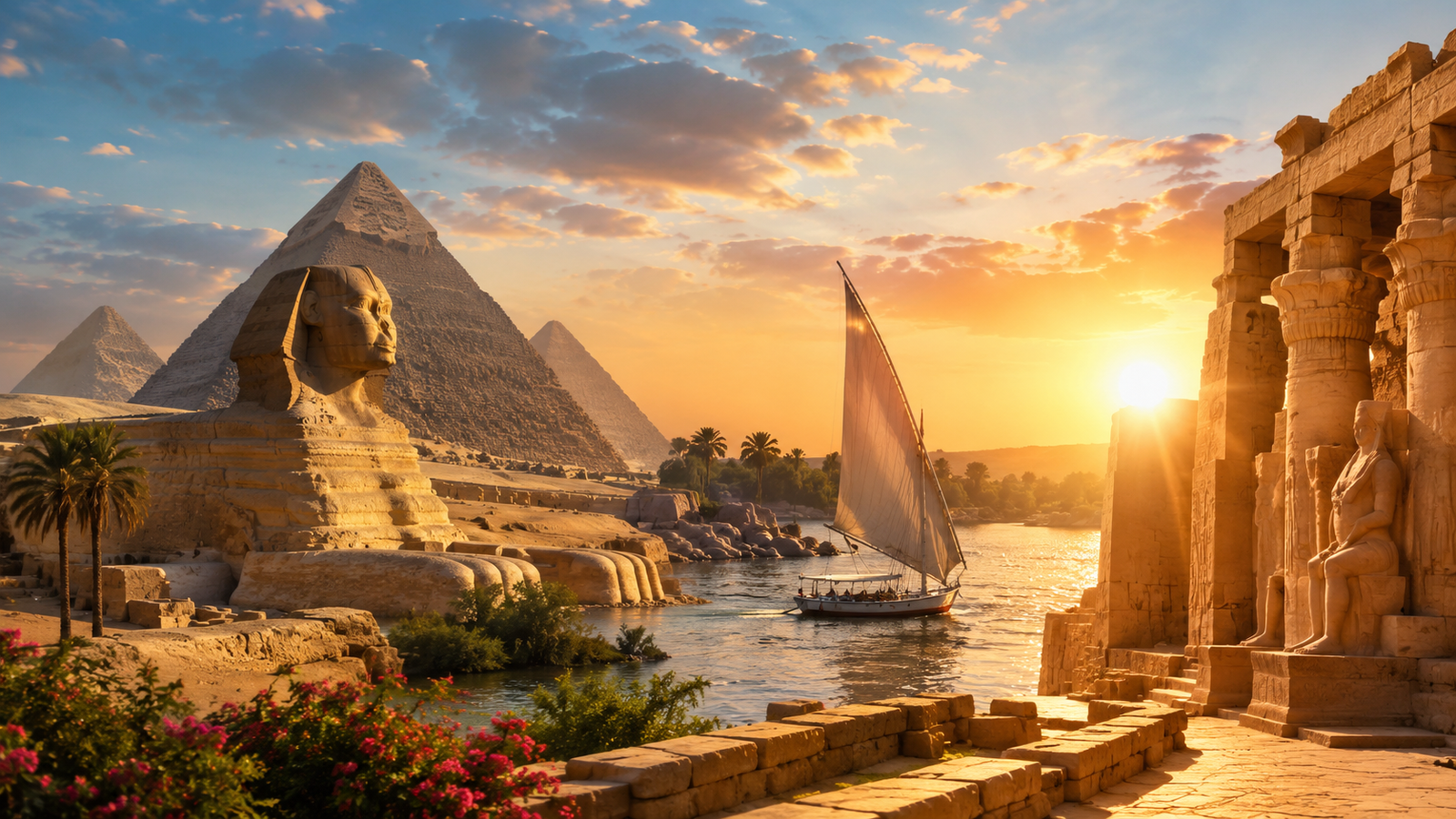
Sunset: Take a traditional felucca (white-sailed wooden sailboat) for a 1–2 hour sunset sail around the Nile islands. The combination of the granite boulders, desert sand, and the golden Nile water at dusk is one of the most beautiful sights in all of Egypt.
Evening: Dinner in Aswan with traditional Nubian food — try grilled Nile perch, stewed legumes with Nubian spices, and fresh mango juice.
Day 8: Abu Simbel Day Trip (Highly Recommended)
Very early morning (5:00 AM): Depart Aswan Airport for the 45-minute flight to Abu Simbel (strongly recommended over the 3.5-hour road convoy).
7:00–9:30 AM: Abu Simbel Temples
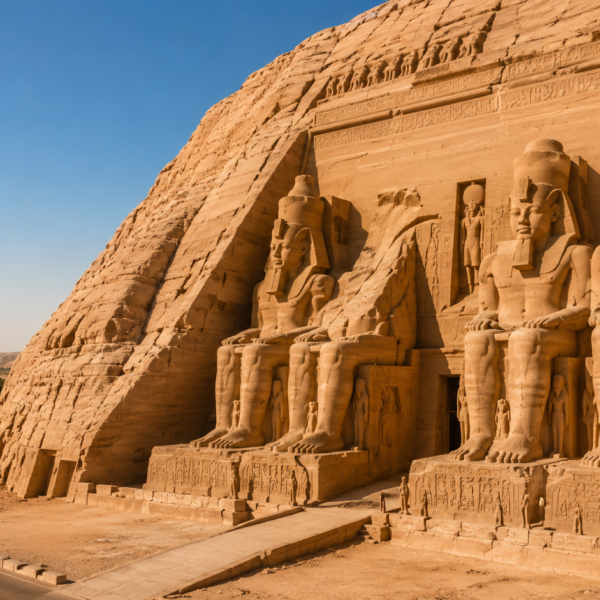
The twin temples of Ramesses II at Abu Simbel are among the most dramatic ancient sites in the world — four colossal 20-meter statues of Ramesses guard the entrance. The temples were cut into blocks and relocated 65 meters higher to save them from Lake Nasser in one of history’s greatest engineering rescues.
Visit both the Great Temple and the smaller Temple of Hathor (Nefertari’s Temple) before the heat and crowds build.
10:30 AM: Return flight to Aswan.
Afternoon: Relax in Aswan or visit the Nubian Village by motorboat — a colorful traditional settlement where you can experience Nubian culture, food, and hospitality.
Day 9: Fly Back to Cairo — Final Day
Morning: Take an early flight back to Cairo (multiple options throughout the day).
Afternoon: Final shopping time in Cairo. Options:
- Khan El Khalili for handicrafts, spices, perfumes, jewelry, and papyrus art
- City Stars Mall or Mall of Egypt for international brands and comfortable air-conditioned browsing
- Wekalet El Ghouri — a restored 16th-century caravanserai now functioning as an arts and crafts market
Evening: Farewell dinner at one of Cairo’s finest restaurants. Options:
- Sequoia (Zamalek) — a renowned garden restaurant on the Nile
- Abou El Sid (Zamalek) — classic Egyptian cuisine in a beautiful traditional setting
- Nile Maxim — an evening dinner cruise on the Nile with entertainment
Day 10: Departure
Morning at leisure. Depending on your flight time:
- Visit the Egyptian Museum in Tahrir Square for a final taste of ancient history (allow 2 hours)
- Revisit the GEM if you wanted more time with the Tutankhamun galleries
- Final coffee at a rooftop café with city views
Transfer to Cairo International Airport for departure.
Where to Stay: Accommodation Recommendations by City
Cairo
Luxor
Aswan
Internal Transport Options
Budget Planning for 10 Days in Egypt
These estimates exclude international flights to and from Egypt.
15 People Also Ask Questions About Egypt Itineraries
1. Is 10 days enough for Egypt?
Ten days is an excellent amount of time for a first visit to Egypt — enough to experience all the main highlights without feeling rushed. You can comfortably cover Cairo (Pyramids, GEM, Islamic Cairo), a 4-night Nile cruise from Luxor to Aswan, the Valley of the Kings, Aswan’s highlights, and a day trip to Abu Simbel within 10 days.
2. What is the best itinerary for Egypt?
The classic Egypt itinerary combines Cairo (2–3 days), Luxor (1–2 days), a 4-night Nile cruise to Aswan, and an Abu Simbel extension. This covers Egypt’s greatest sites in a logical geographical and logistical sequence. The 10-day itinerary in this guide represents the gold standard for first-time visitors.
3. How much money do I need for 10 days in Egypt?
Budget travelers can experience 10 days in Egypt for $1,000–1,500 USD (excluding international flights). Mid-range travelers should budget $2,000–3,500 USD. Luxury travelers should budget $4,500+ USD. Egypt offers genuinely excellent value for money across all categories.
4. What should I not miss in Egypt?
The absolute must-see experiences in Egypt are: the Pyramids of Giza and Sphinx, the Grand Egyptian Museum (Tutankhamun’s treasures), a Nile cruise between Luxor and Aswan, the Valley of the Kings, Karnak Temple, Abu Simbel, and the Philae Temple in Aswan. Additionally, an evening walking the alleys of Khan El Khalili in Cairo is an experience uniquely Egypt.
5. Is 7 days enough for Egypt?
Seven days is possible but tight. You can do a compressed version: 2 days Cairo (Pyramids + GEM), fly to Luxor for 1 day, 3-night Nile cruise to Aswan, depart from Aswan. You won’t have time for Abu Simbel, Coptic Cairo, or a balloon ride. Ten days is noticeably more comfortable.
6. What is the best way to travel between Egyptian cities?
Domestic flights are the most efficient way to cover Egypt’s distances. Cairo to Luxor is 1 hour by air. EgyptAir operates frequent services between Cairo, Luxor, Aswan, and the Red Sea resorts. Overnight sleeper trains between Cairo and Luxor/Aswan are a classic experience and save a hotel night for those with more time.
7. When is the best time to visit Egypt?
November through February offers the ideal weather for visiting Egypt, with pleasant temperatures of 15–25°C perfect for outdoor ancient site visits. October and March–April are excellent shoulder season alternatives. The 2027 Solar Eclipse on August 2 is a once-in-a-century reason to visit in summer, positioning yourself in Luxor or Aswan for the path of totality.
8. Should I book a guided Egypt tour or travel independently?
Both approaches work, but for first-time visitors a guided tour (or a mix of guided and independent) is strongly recommended. Egypt’s ancient sites are significantly richer experiences with a knowledgeable guide, and having logistics handled frees you to focus entirely on the experience. Egypt Travel Ways offers flexible private tours tailored to your pace and interests.
9. How many days should I spend in Cairo?
Three days in Cairo is ideal for a comprehensive first visit: Day 1 for Pyramids and GEM, Day 2 for Islamic and Coptic Cairo, Day 3 for the Egyptian Museum and Khan El Khalili. Two days is possible if you focus on the Pyramids, GEM, and one evening in the bazaar. One day is a rushed but manageable experience for the Pyramids and GEM only.
10. Do I need a visa for Egypt?
Most Western nationalities can obtain a visa on arrival at Egyptian international airports or apply in advance online via the e-visa system (visa2egypt.gov.eg). The standard tourist visa costs approximately $25 USD and allows a stay of up to 30 days. Multiple-entry visas are also available. Always check the current visa requirements for your specific nationality before traveling.
11. What is the best Nile cruise for first-timers?
For first-time Nile cruisers, a mid-range 4-night Luxor to Aswan cruise on a well-maintained ship with a licensed Egyptologist guide is the ideal introduction. Ships like the Movenpick MS Royal Lotus or Sonesta St. George offer reliable quality at mid-range prices. For special occasions, the Oberoi Philae represents the pinnacle of Nile cruise luxury.
12. How should I prepare for Egypt’s heat?
Acclimatization is important, particularly if visiting in spring or autumn. Practical preparations: bring SPF 50+ sunscreen and apply before leaving your accommodation; carry a reusable water bottle and refill frequently; wear lightweight, breathable clothing in light colors; plan outdoor activities for morning and late afternoon; stay in air-conditioned transport between sites in hot weather.
13. Can I combine Egypt with another country?
Yes — Egypt combines well with several regional destinations. Jordan (Petra, Wadi Rum) is a natural combination, with direct flights from Cairo to Amman. The UAE (Dubai, Abu Dhabi) is a popular stopover option. Israel and the Palestinian Territories are accessible from Cairo via the Taba or Rafah crossings (subject to current conditions). A combined Egypt-Greece or Egypt-Turkey itinerary is possible with careful planning.
14. Is Egypt good for families with children?
Egypt can be a wonderful destination for families — the ancient monuments, camel rides, felucca sailboats, and Red Sea beaches are all appealing to children. Practical considerations: the heat requires careful management for young children; the grand scale and complexity of ancient sites engages children better from around age 7–8 upward; a private guide specifically experienced with families makes a significant difference.
15. What Egyptian food should I try during my 10 days?
Egypt has a wonderful food culture. Must-try dishes include: koshary (Egypt’s national dish — rice, pasta, lentils, and crispy onions in a spiced tomato sauce), ful medames (slow-cooked fava beans with olive oil and spices — the Egyptian breakfast staple), ta’meya (Egyptian falafel made from fava beans), grilled kofta (spiced minced meat), feteer meshaltet (flaky Egyptian flatbread), om ali (Egyptian bread pudding with cream and nuts), and fresh mango juice — one of the best things you’ll drink in Egypt.
Book Your 10-Day Egypt Tour with Egypt Travel Ways
Planning a 10-day Egypt itinerary involves dozens of decisions and logistics — flights, hotels, cruise bookings, guided tours, internal transfers, and more. Egypt Travel Ways handles all of it.
We create personalized, fully-managed Egypt itineraries that combine your interests, budget, and pace preferences with our deep knowledge of the country, its sites, and its best guides and accommodations. You arrive, you experience, you leave with memories that will last a lifetime.
Contact Egypt Travel Ways today to book your 10-Day Classic Egypt Tour — all inclusive, no hidden fees.