Khan El Khalili Bazaar Guide 2027 – Shopping, Food & What to See
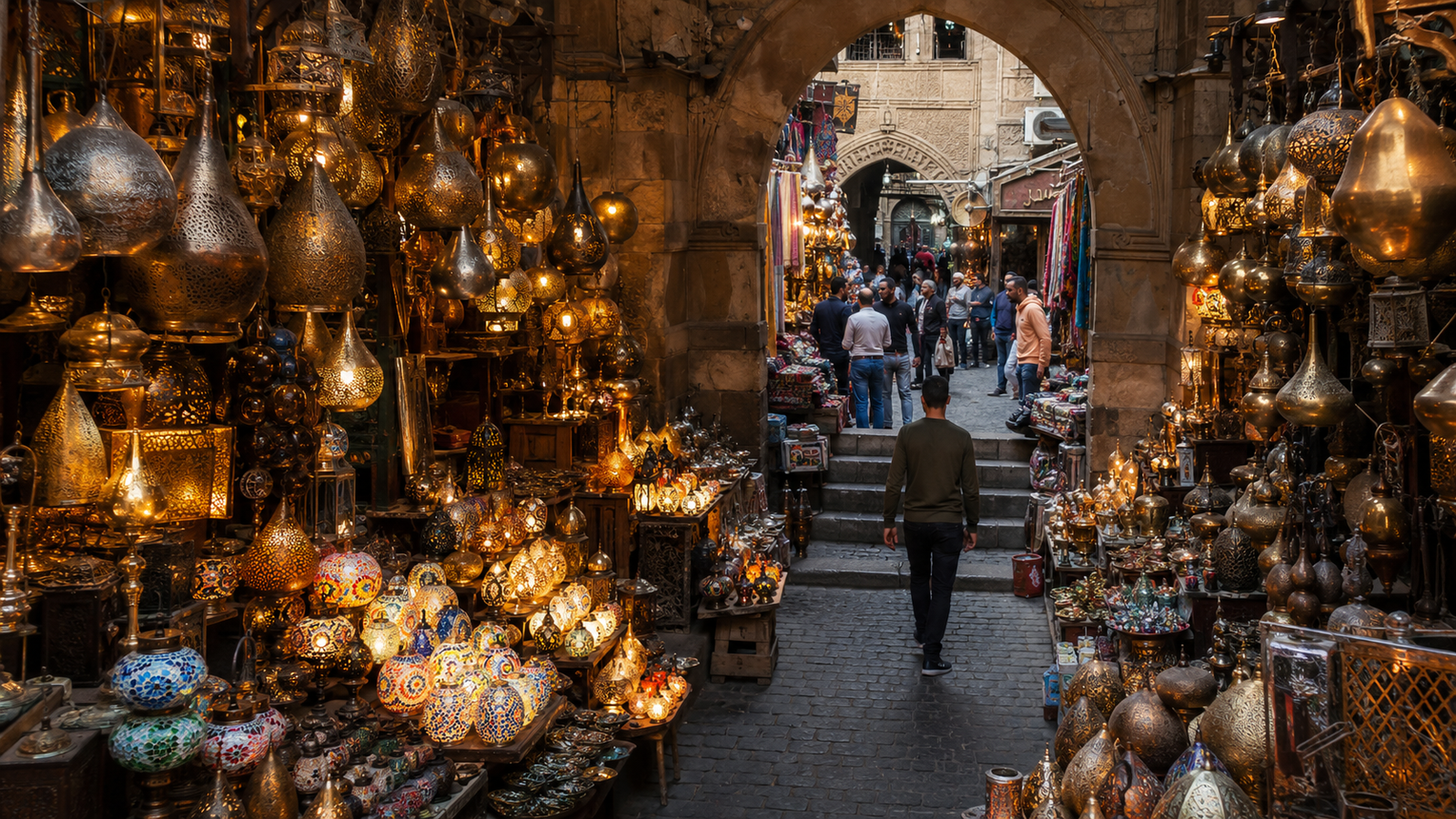
Khan El Khalili is Cairo’s medieval soul. Established in the 14th century as a caravanserai — a resting place and trading hub for merchant caravans — it has been a center of commerce, craftsmanship, and social life for over 600 years. Today it remains one of the most extraordinary markets in the world: a labyrinthine network of alleys, workshops, mosques, cafes, and shops selling everything from handcrafted silver jewelry to aromatic spices, from papyrus art to belly dancing costumes, from antique lanterns to hand-stitched leather goods.
No visit to Cairo is complete without Khan El Khalili. But to get the most from it — and to navigate its occasional tourist-trap pitfalls — preparation helps. This comprehensive 2027 guide covers everything: what to buy, where to eat, how to bargain, the best hidden alleys, and how to combine Khan El Khalili with Islamic Cairo for the complete experience.
For the broader Cairo context, see our Giza Pyramids Guide and our Is Egypt Safe 2027 Guide for general safety awareness.
History: 600 Years of Commerce
Khan El Khalili was established in 1382 CE by Jarkas El Khalili, the Master of Horse for the Mamluk Sultan Barquq. Built on the site of a Fatimid royal cemetery, the original khan (caravanserai) housed foreign merchants and their goods in a fortified building that served as warehouse, inn, and trading floor simultaneously.
Under the Mamluks and later the Ottomans, the market expanded dramatically, developing into the specialized trade quarters that still partially define it today. Each alley was traditionally dedicated to a specific trade: goldsmiths in one street, copper workers in another, perfumers in a third, spice dealers in a fourth. Many of these specializations survive.
The name “El Khalili” stuck through the centuries despite various expansions and renovations. The Mamluk gates at the entrance, the narrow alleys designed to channel foot traffic and create intimacy, the overhead wooden latticework filtering the sun — all reflect the medieval commercial architecture that defines the khan’s character.
What to Buy at Khan El Khalili
Papyrus Art
Egypt’s most iconic tourist souvenir. Genuine papyrus — made from the papyrus plant that once grew abundantly along the Nile — is sold in Khan El Khalili in many forms: paintings of ancient Egyptian scenes, cartouches with your name in hieroglyphs, scenes from the Book of the Dead, and abstract designs.
How to distinguish genuine from fake: Real papyrus is made from pounded papyrus plant fibers and has a slightly rough, irregular texture with visible plant fibers. It flexes without cracking. Fake “papyrus” is made from banana leaves or other materials that are smooth, uniform, and crack when bent.
Price guide: Small pieces (A5 size): 100–300 EGP. Medium (A4): 200–500 EGP. Large (A3 and above): 400–1,500 EGP depending on complexity. Prices are heavily inflated initially — negotiate firmly.
Cartouche Jewelry
A cartouche is the oval hieroglyphic frame that surrounds a pharaoh’s name. Having your name written in hieroglyphs inside a cartouche is one of Egypt’s great personalized souvenirs.
Khan El Khalili’s gold and silver quarters have numerous jewelers who create cartouche pendants, bracelets, and rings on-site. Sterling silver cartouches are more affordable; gold cartouches are premium items.
Price guide for silver: Small cartouche pendant: 200–500 EGP. Allow 30–60 minutes for on-the-spot creation.
Tip: Ask to see the craftsman create your cartouche from scratch — watching the hand-engraving process is itself a memorable experience.
Spices and Herbs
The spice section of Khan El Khalili is one of its most aromatic and atmospheric areas. Sacks of vivid spices line the alleys — saffron, cumin, coriander, star anise, cardamom, hibiscus (karkade), chamomile, and dozens of others.
What to buy:
- Hibiscus/Karkade: Egypt’s national drink — dried hibiscus flowers that make a tart, beautiful red tea. Excellent quality and distinctive flavor.
- Egyptian saffron: Far cheaper than European saffron. Check quality by crumbling a few threads — genuine saffron releases color and aroma immediately.
- Mixed spice blends: Pre-mixed kofta spice, shawarma spice, and other Egyptian cooking blends make excellent gifts.
Price tip: Spice prices in the tourist section of Khan El Khalili are significantly inflated. For better prices, walk toward the back of the market where local Cairenes shop.
Handcrafted Brass and Copper
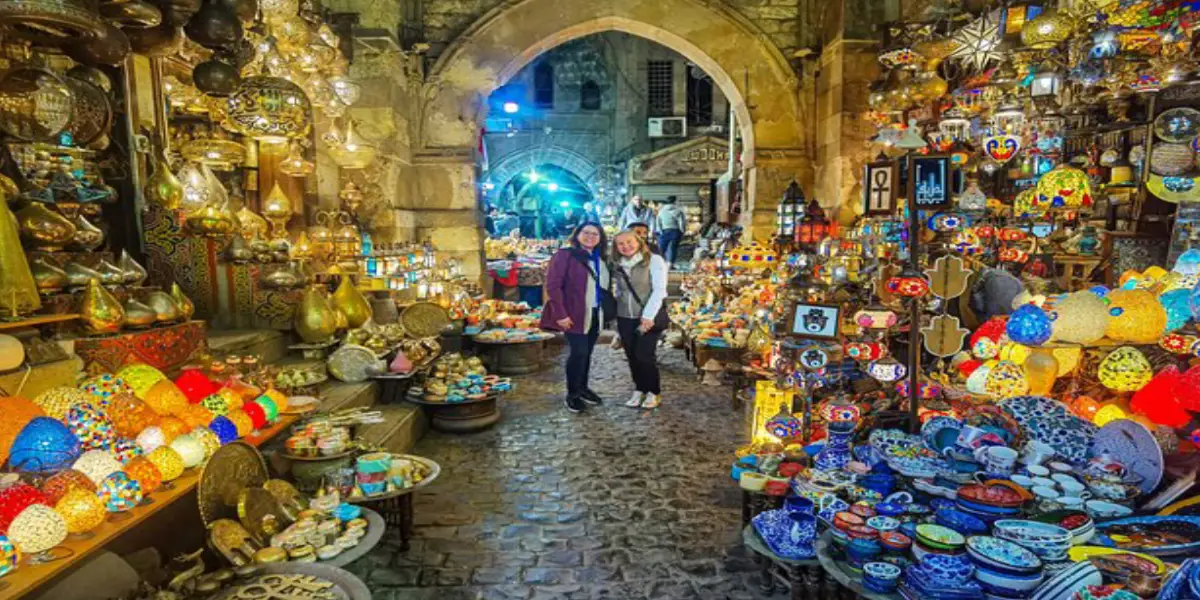
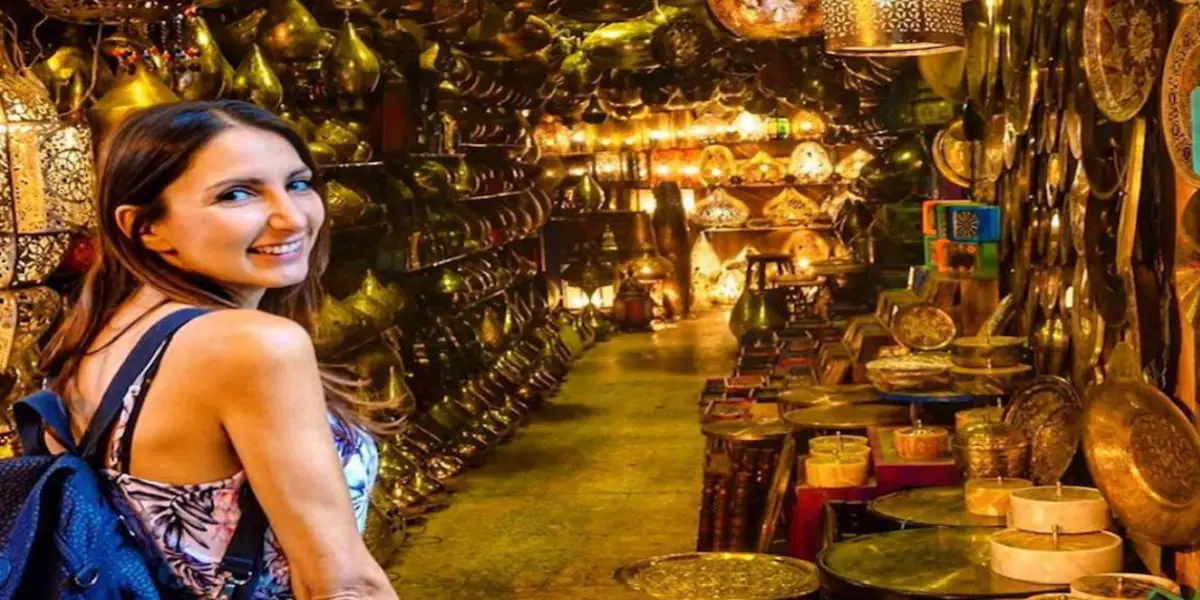
Workshops in the coppersmith quarter produce extraordinary handcrafted items: traditional lanterns, coffee sets, trays, bowls, and decorative plates with intricate geometric patterns hammered from sheet metal.
Many items are crafted on-site — you can watch craftsmen work and commission custom pieces. The sound of hammering copper and brass is one of Khan El Khalili’s signature soundscapes.
Textiles and Embroidery
Egyptian cotton is rightly famous — thread counts of 400–800+ and a silky softness make Egyptian cotton bedding and clothing among the world’s finest. Look for:
- Galabiya: Traditional Egyptian robe — beautiful, comfortable, and practical as a beach cover-up or house garment
- Embroidered tablecloths and cushion covers: Often handmade by families in Upper Egypt
- Bedouin weaving: Distinctive geometric patterns in natural wool fibers
Alabaster
Alabaster (calcite) is quarried near Luxor and has been used in Egyptian craftsmanship for millennia. Bowls, vases, chess sets, and decorative figurines in translucent white and honey-colored alabaster are sold throughout the market. When backlit, alabaster glows warmly — a beautiful material for home decoration.
Perfumes and Essential Oils
Egypt’s perfume tradition is ancient — Egyptian aromatics were traded throughout the ancient Mediterranean world. Khan El Khalili’s perfumers offer concentrated essential oils and blend custom perfumes to order.
Tip: Many vendors will invite you inside to smell dozens of oils. This is fine — but be aware that the elaborate sampling ritual creates reciprocity pressure to buy. You’re under no obligation. Smell what you like, say “shukran” (thank you), and buy only what genuinely appeals to you.
What NOT to Buy
“Genuine ancient artifacts”: Egyptian law strictly prohibits the export of genuine antiquities. Any “real ancient artifact” available for tourist purchase is either a reproduction (legally fine) or stolen goods (illegal). The elaborate provenance stories are fiction. Buy as decorative reproductions, not as “investments” or “genuine antiques.”
Cairo City Treasures – Citadel, Old Cairo & Khan El Khalili Tour
The Best Cafes and Food at Khan El Khalili
El Fishawy Café
The most famous café in all of Egypt — reportedly open continuously since 1773. El Fishawy is tucked into a narrow alley in the heart of the market: a series of small interconnected rooms and alley seating, with gilded mirrors, ornate wooden furniture, and the hum of centuries of conversation.
The menu is simple: mint tea, Turkish coffee, fresh juices, and shisha (water pipe). The prices are tourist-adjusted but not outrageous for the experience. Sitting at El Fishawy, drinking mint tea from a heavy glass while watching the market flow past, is one of Cairo’s great pleasures.
Address: El Fishawy is in the central heart of the bazaar — ask any vendor and they’ll point you in the right direction.
External resource: El Fishawy on TripAdvisor — consistently among Cairo’s top-rated cafes.
Naguib Mahfouz Café and Restaurant
Named after Egypt’s Nobel Prize-winning novelist, who spent much of his life writing in nearby cafes. A slightly more upscale option serving Egyptian cuisine alongside Western dishes. The restaurant is tucked into the bazaar alleys and offers a welcome sit-down respite from the market bustle.
Street Food in the Alleys
For authentic, inexpensive food near the market:
- Koshary shops: Egypt’s national dish — rice, pasta, lentils, and crispy onions in spiced tomato sauce. Approximately $1–2 USD for a generous bowl.
- Ful and ta’meya stalls: Fava bean sandwiches and Egyptian falafel — the classic Cairo breakfast, available all day.
- Fresh juice stands: Mango, guava, pomegranate, and sugar cane juice — extraordinarily fresh and cheap.
How to Bargain at Khan El Khalili
Bargaining is not just acceptable at Khan El Khalili — it is expected and part of the cultural experience. Prices are set high with the understanding that negotiation will reduce them. Here is the practical guide:
Start at 20–25% of the asking price. If a vendor asks 500 EGP, offer 100–125 EGP. This might seem aggressive, but it is culturally appropriate and both parties understand the game.
React with friendly shock at the first price. A slight look of amused disbelief is the appropriate response to an opening offer — not offense or anger.
Counter in stages. Don’t immediately offer your maximum. Increase your offer gradually: 100 → 150 → 175 → 200 EGP, allowing the vendor to feel the negotiation is moving.
Walk away (genuinely) if needed. If the price isn’t reaching your target, say “thank you, maybe next time” and begin to leave. In many cases, the vendor will call you back with a lower price. This technique works consistently.
Know the fair price. Before buying anything significant, get quotes from 2–3 vendors for comparison. This gives you a sense of the real market price for an item.
Don’t bargain if you’re not going to buy. Serious negotiation creates an implicit commitment. Walking away after agreeing on a price is considered rude.
The Hidden Gems: Beyond the Tourist Alleys
The main tourist alleys of Khan El Khalili have the highest prices and the most persistent vendors. For a more authentic and better-value experience:
Walk toward Al-Azhar Street and beyond. The alleys extending east toward Al-Azhar University become progressively more local in character. Here you’ll find spice sellers, fabric merchants, and craft workshops catering to Cairenes rather than tourists — better prices and less pressure.
The gold market. The dedicated gold quarter, running along certain streets, features shop after shop of gold jewelry sold by weight. Prices are more fixed here (based on daily gold prices) and the atmosphere more businesslike.
The copper quarter. The traditional metalworking area is one of the most atmospheric parts of the market — workshops where craftsmen hammer and engrave copper and brass items, with the sound and smell of hot metal filling the alleys.
Khan El Khalili at Night
The market is open until approximately 9:00–10:00 PM, and evening is one of the best times to visit. The heat of the day has passed, the lighting creates a warm, golden atmosphere, and the crowds are a mix of tourists and Cairenes going about evening shopping.
The area around El Fishawy and the main mosque is particularly atmospheric after dark — local families, students, and visitors creating a vibrant social scene that feels genuinely like Cairo’s medieval heart still beating.
Cairo City Treasures – Citadel, Old Cairo & Khan El Khalili Tour
Combining Khan El Khalili with Islamic Cairo
Khan El Khalili sits in the heart of Islamic Cairo — a UNESCO-designated historic district containing some of Egypt’s finest medieval Islamic architecture. Combining the market visit with a walking tour of Islamic Cairo makes for one of the most extraordinary half-days available in any city.
Key nearby sites within walking distance:
- Al-Azhar Mosque: One of the oldest universities on Earth, founded in 970 CE. Free to enter; women require a headscarf.
- Al-Hussein Mosque: One of Cairo’s most important religious sites. Non-Muslims may visit outside prayer times.
- Al-Muizz Street: A 1-kilometer street lined with Mamluk and Fatimid monuments, considered one of the most important streets for Islamic architecture in the world.
- Bab Zuweila: The magnificent 11th-century southern gate of Fatimid Cairo, with climbable minarets offering panoramic views.
- The Citadel of Saladin: 15 minutes by taxi — the medieval fortress housing the famous Alabaster Mosque of Muhammad Ali.
For a full Islamic Cairo walking guide, see our Islamic Cairo Walking Tour Guide.
Practical Information
Location: Al Hussein Square, Islamic Cairo, Cairo
Opening hours: Most shops open 9:00 AM – 9:00 PM daily. Some shops close Friday afternoon. The general market area is accessible at all hours.
Getting there: Uber or another currently available ride-hailing service to “Khan El Khalili” — straightforward from anywhere in Cairo. Approximately 15 minutes from central Cairo.
Dress code: No strict requirements, but modest dress (covered shoulders, knees for women) is respectful in this conservative area.
External Resources
- UNESCO Historic Cairo World Heritage — Historic Cairo World Heritage documentation
- TripAdvisor — Khan El Khalili — Recent visitor reviews
- Lonely Planet — Cairo — Comprehensive Cairo travel guide
15 People Also Ask Questions About Khan El Khalili
1. What is Khan El Khalili famous for?
Khan El Khalili is Cairo’s famous medieval bazaar and one of the largest and most historic markets in the Middle East. Founded in 1382 CE, it’s known for its labyrinthine alleys, traditional craftsmanship (gold and silver jewelry, copper and brass items, spices, papyrus art, alabaster, perfumes, and textiles), the historic El Fishawy Café (reportedly open since 1773), and its atmosphere of centuries of continuous commercial life.
2. Is Khan El Khalili safe?
Yes, Khan El Khalili is safe for tourists. The area has tourist police presence and is heavily visited. The main concerns are the usual tourist market dynamics — persistent vendors and haggling pressure rather than physical safety. Using firm, polite “no thank you” responses and not accepting unsolicited gifts eliminates most discomfort. For general Egypt safety, see our Is Egypt Safe 2027 Guide.
3. How do you get to Khan El Khalili from central Cairo?
Use Uber or another currently available ride-hailing service — both apps work excellently in Cairo and provide fixed prices with GPS tracking. Search for “Khan El Khalili” or “Al Hussein Square.” The journey from downtown Cairo takes approximately 15–20 minutes. Alternatively, take the Cairo Metro to Ataba station and walk 15 minutes.
4. What are the best things to buy at Khan El Khalili?
The best purchases at Khan El Khalili are: custom silver cartouche jewelry (your name in hieroglyphs), genuine papyrus artwork, Egyptian spices (especially hibiscus/karkade and saffron), handcrafted brass and copper lanterns, alabaster bowls and figurines, Egyptian cotton textiles, and concentrated perfume oils. All require bargaining except fixed-price items like gold sold by weight.
5. How do you bargain at Khan El Khalili?
Start at 20–25% of the asking price and negotiate in stages. React with friendly skepticism to the opening price (not offense). Walk away if needed — this often results in the vendor calling you back with a better price. Don’t bargain seriously if you’re not planning to buy. Know comparative prices by checking with 2–3 vendors before making significant purchases.
6. What is El Fishawy Café?
El Fishawy is the most famous café in Egypt, reportedly open continuously since 1773. Located in the heart of Khan El Khalili’s alleys, it serves mint tea, Turkish coffee, fresh juices, and shisha in an atmospheric space of gilded mirrors and antique furniture. It was a favorite gathering place of Nobel Prize-winning author Naguib Mahfouz and has been described as the soul of Cairo. An essential stop during any Khan El Khalili visit.
7. When is the best time to visit Khan El Khalili?
Late afternoon and evening (4:00–9:00 PM) is the ideal time — cooler than midday, beautifully lit, and with a vibrant atmosphere as locals and tourists mix in the alleys. Friday afternoon is quieter as some shops close for prayers. Visiting after sunset creates the most atmospheric experience of the medieval market.
8. Is Khan El Khalili expensive?
Initial prices are always inflated for tourists — 3–5 times the fair price. After bargaining, many items are very affordable by international standards. Small papyrus pieces: $5–15. Silver cartouche pendant: $10–20. Spices: $2–8 per type. Brass lantern: $15–40. The experience itself (entering the market, using El Fishawy) is free.
9. What should I not buy at Khan El Khalili?
Avoid: “genuine ancient artifacts” (they’re either reproductions or illegal stolen goods — the elaborate stories are fiction); imitation papyrus (banana leaf or other materials sold as papyrus — test by flexing the paper); counterfeit brand goods. For genuine purchases, research fair prices beforehand and buy only from shops where you can verify authenticity.
10. Can I visit Khan El Khalili without buying anything?
Absolutely. Many visitors visit Khan El Khalili primarily for the atmosphere, the El Fishawy Café experience, and the people-watching rather than shopping. Walking through the alleys, watching craftsmen work, photographing the architecture, and sitting at a traditional café is a complete experience in itself. Vendors will approach you, but “just looking, thank you” is a completely acceptable response.
11. What is near Khan El Khalili to visit?
Within walking distance: Al-Azhar Mosque (one of the world’s oldest universities), Al-Muizz Street (the most important street for Islamic architecture in Cairo), Bab Zuweila (the 11th-century southern gate with climbable minarets), Al-Hussein Mosque, and the beginning of the Islamic Cairo UNESCO heritage district. For a full guide, see our Islamic Cairo Walking Tour Guide.
12. Is Khan El Khalili good for buying gold?
Yes — Khan El Khalili has a dedicated gold quarter where gold jewelry is sold by weight at daily market prices. This is one of the more transparent pricing areas of the market (gold price + craftsmanship markup) and offers good value compared to European prices. Bring a reference price (check current gold spot prices on xe.com) to evaluate offers.
13. How long should I spend at Khan El Khalili?
A minimum visit of 1.5–2 hours covers the main market alleys and El Fishawy. A thorough visit combining shopping, the café, and exploring the adjacent Islamic Cairo monuments takes 3–4 hours. If you enjoy markets and are a serious shopper, a half-day is easily spent.
14. What food can I eat near Khan El Khalili?
El Fishawy Café for mint tea and shisha (atmospheric and essential). Naguib Mahfouz Restaurant for sit-down Egyptian cuisine. Street food stalls for koshary (rice, pasta, lentils in spiced tomato sauce — Egypt’s national dish), ful and ta’meya sandwiches, and fresh juices. The streets around the market have numerous food options from $1–15 USD.
15. Is it worth visiting Khan El Khalili on a short Cairo trip?
Yes, absolutely. Khan El Khalili is one of Cairo’s essential experiences — not primarily for shopping, but for the atmosphere, history, and cultural immersion it provides. An evening at the market followed by mint tea at El Fishawy is one of the most memorable things you can do in Cairo. Even 2 hours here gives a vivid sense of Cairo’s medieval character.
Book Your Cairo City Tour with Egypt Travel Ways
Egypt Travel Ways includes Khan El Khalili in our Cairo City Tours — combining the Pyramids, Grand Egyptian Museum, Islamic Cairo, and the bazaar in guided experiences that maximize your Cairo time.
Contact Egypt Travel Ways today to book your Cairo City Tour — Pyramids, Museums & Old Cairo.