Giza Pyramids Complete Guide 2027 – Everything You Need to Know
Last fact-checked: 1 October 2026. Ticket prices and opening times can change. Current figures below are based on the official Ministry of Tourism & Antiquities ticketing platform.
The Pyramids of Giza are the last surviving wonder of the ancient world, the most recognized monuments on Earth, and for most visitors to Egypt, the single most anticipated experience of their entire trip. Standing before the Great Pyramid of Khufu for the first time — confronting 2.3 million limestone blocks, each weighing an average of 2.5 tons, stacked to a height that makes a six-story building look modest — is a genuinely overwhelming experience.
But visiting the Pyramids well requires preparation. The Giza Plateau is large, the ticketing is complex, the vendor culture is persistent, and the difference between a wonderful experience and a frustrating one comes down almost entirely to how well you’ve prepared. This complete 2027 guide gives you everything you need.
For the evening experience, see our Sound and Light Show Guide. For the adjacent world-class museum, see our Grand Egyptian Museum Guide. For scam awareness, see our Egypt Tourist Scams Guide.
The Three Pyramids — What You’re Actually Seeing
The Great Pyramid of Khufu (Cheops)
Built around 2560 BCE for Pharaoh Khufu, the Great Pyramid held the title of tallest man-made structure on Earth for approximately 3,800 years (until the completion of Lincoln Cathedral in England around 1300 CE). It originally stood 146.5 meters tall; erosion and the loss of its smooth white limestone casing have reduced it to approximately 138 meters today.
The pyramid contains an estimated 2.3 million limestone blocks averaging 2.5 tons each, with some granite blocks in the King’s Chamber weighing up to 80 tons. The precision of construction is extraordinary — the base is level to within 2.1 cm across its 230-meter sides, and the sides are oriented to true north with an accuracy of less than 0.05 degrees.
The interior: Three chambers connected by passages are accessible inside the Great Pyramid — the Subterranean Chamber (unfinished), the Queen’s Chamber, and the King’s Chamber (with the empty red granite sarcophagus of Khufu). The Grand Gallery — a soaring corbeled passage 8.5 meters high and 47 meters long — is architecturally extraordinary.
Entry: A separate premium ticket is required for the pyramid interior. Numbers are strictly limited — purchase early in the morning. The crawling passage is not for those with claustrophobia.
The Second Pyramid of Khafre
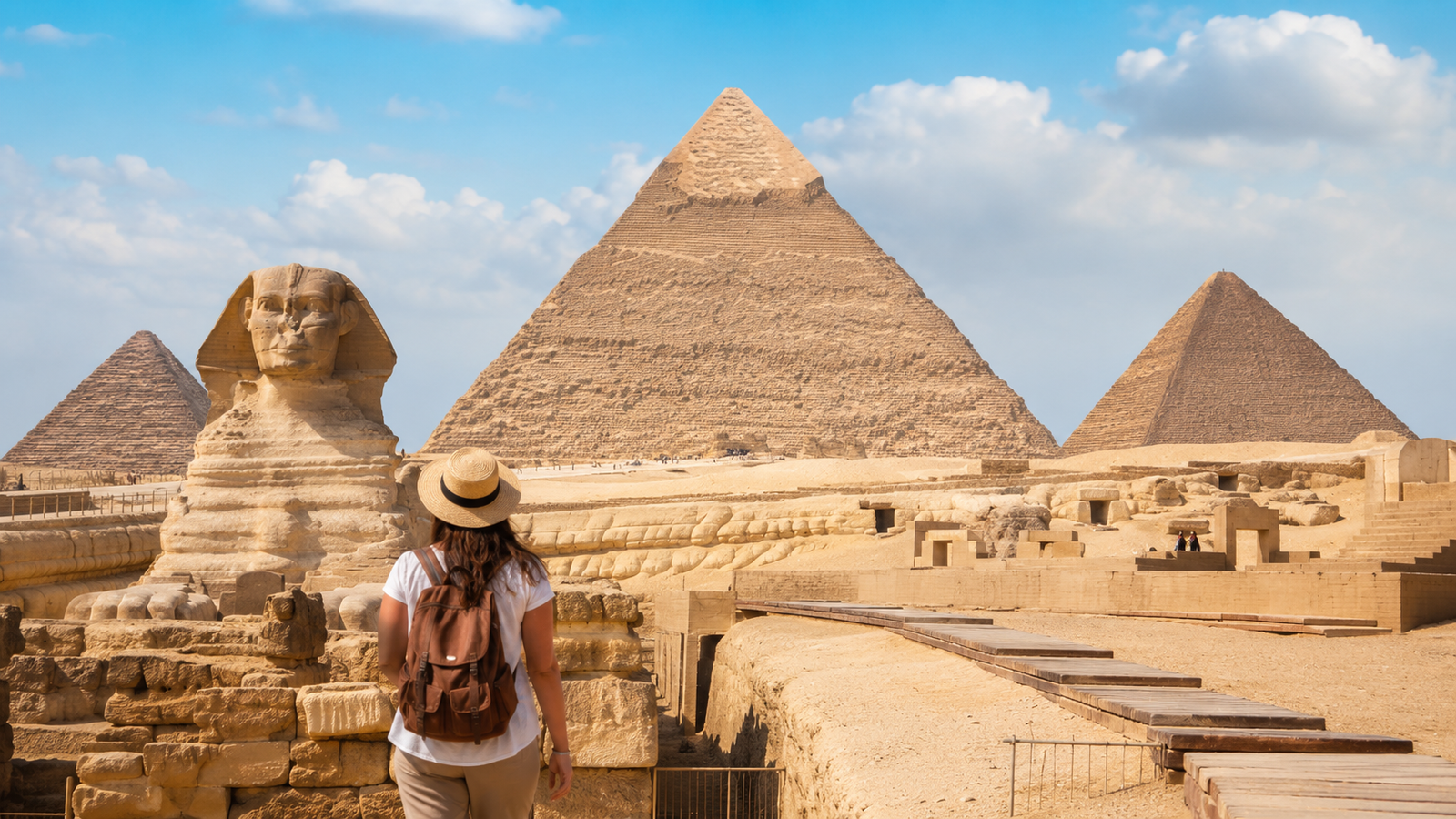
Built approximately 2530 BCE for Khufu’s son Khafre, the second pyramid appears taller than the Great Pyramid due to its higher ground position, though it is actually slightly smaller (136 meters). It retains its original smooth limestone casing at the apex — giving a clear impression of how all three pyramids originally appeared.
The Third Pyramid of Menkaure
The smallest of the three royal pyramids, built for Khafre’s son Menkaure around 2510 BCE. Standing 65 meters high, it is still an enormous structure — dwarfed only by comparison with its extraordinary neighbors.
The Great Sphinx
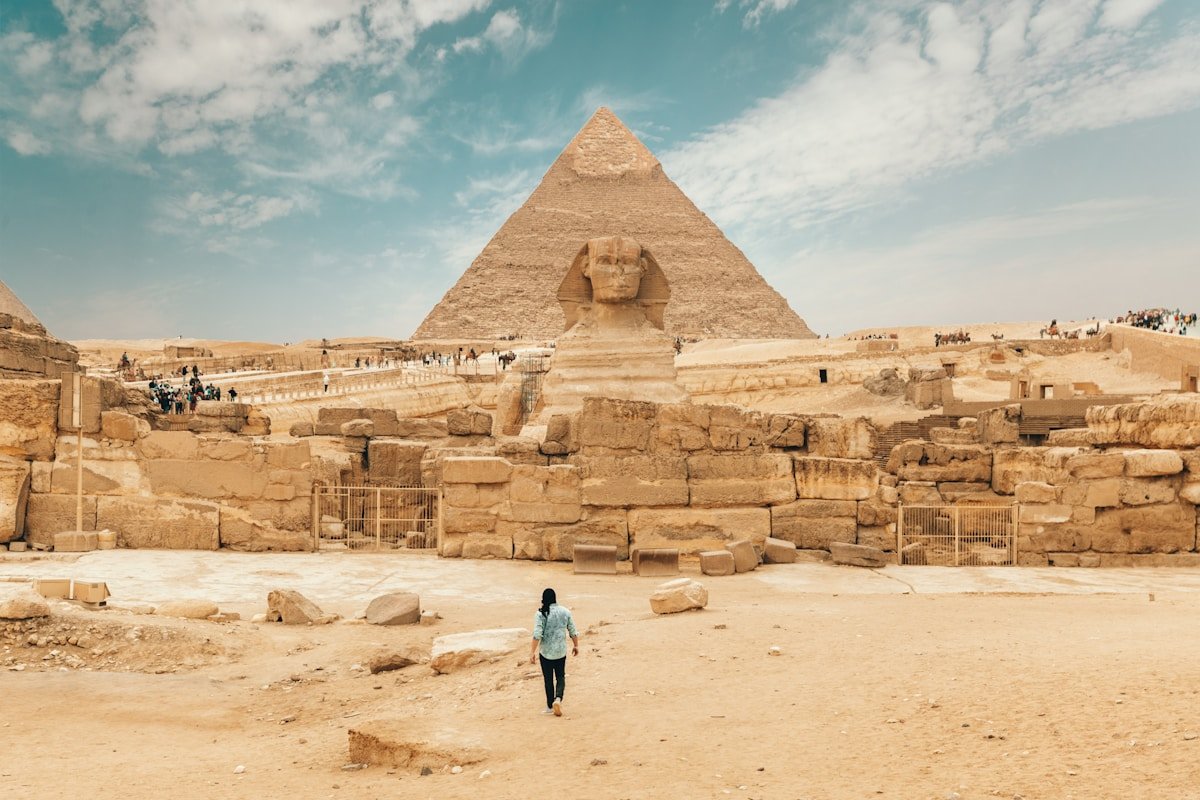
The Sphinx — a 73-meter long, 20-meter high sculpture of a lion’s body with a human head — sits immediately east of the Second Pyramid. It is carved from the natural limestone bedrock of the Giza Plateau, with the face believed to represent Pharaoh Khafre.
The Sphinx is older than most people realize — Egyptologists date it to approximately 2500 BCE, contemporary with the Second Pyramid. Water erosion patterns on the Sphinx’s body have led some researchers to suggest it may be significantly older — though this remains contested.
Between the Sphinx’s paws stands the Dream Stele of Thutmose IV (18th Dynasty), recording a dream in which the Sphinx promised Thutmose the kingship in exchange for clearing the sand that had buried it.
Best photography position: Stand south of the Sphinx for the classic shot with the pyramid in the background. Early morning light illuminates the face most dramatically.
The Valley Temple
Immediately adjacent to the Sphinx, the Valley Temple of Khafre is one of the oldest and best-preserved stone temples in Egypt. Built of massive granite blocks weighing up to 100 tons, it served as the mortuary temple where Khafre’s body was prepared for burial and rituals were performed.
Practical Information
Address: Al Haram, Giza Governorate (2 km from the GEM, 30–45 minutes from central Cairo)
Opening Hours: The official ticketing platform currently lists entry from 7:00 AM with last entry at 4:00 PM in both summer and winter. Ramadan hours are listed separately.
Best arrival time: Early morning is usually the most comfortable time for walking the plateau, especially in warmer months.
Tickets and Entrance Fees (2027)
As of 1 October 2026, the official Ministry of Tourism & Antiquities booking platform lists:
- Giza Plateau entry for foreign adults: EGP 700
- Foreign student entry: EGP 350
- Khufu (Great Pyramid) interior add-on for foreign adults: EGP 1,500
- Menkaure Pyramid interior add-on for foreign adults: EGP 280
Prices can change, so verify the total on the official booking platform before your visit. The reconstructed Khufu boat is now displayed at the Grand Egyptian Museum, not in a separate Solar Boat Museum on the Giza Plateau.
Official tickets: Ministry of Tourism & Antiquities ticketing platform.
The Panorama Point — The Essential Photograph
For the iconic “all three pyramids in a line” photograph — with the three pyramids descending in perfect size from the Great Pyramid to the smallest — you need the Panorama Point at the southwestern edge of the plateau. This is NOT accessible by walking from the main entrance — it requires a separate taxi or Uber ride (approximately 10–15 minutes).
Arrange this with your driver before you enter the main complex, or plan it as a separate stop either before or after your main plateau visit.
Best photography time at Panorama Point: Sunrise or the hour before sunset — the low-angle light creates long shadows between the pyramids and maximum visual drama.
Inside the Great Pyramid — What to Expect
If you choose to enter the Great Pyramid:
The passage: Entering the pyramid involves descending a narrow passage at approximately 26° angle, requiring you to stoop significantly. The passage is approximately 1.2 meters wide and 1.2 meters high — genuinely claustrophobic for those prone to enclosed spaces. Ascending/descending takes 5–8 minutes each way.
The Grand Gallery: The most architecturally dramatic interior space — a soaring corbeled passage 8.5 meters high leading to the King’s Chamber.
The King’s Chamber: A rectangular room of red Aswan granite, containing the empty basalt sarcophagus of Khufu. The chamber is 10.5 x 5.2 meters with a flat ceiling of nine monolithic granite slabs weighing approximately 25–40 tons each.
Ventilation shafts: Two narrow shafts run from the King’s Chamber toward the exterior, oriented toward significant astronomical positions — the circumpolar stars to the north, Orion’s Belt (associated with Osiris) to the south.
Tips for interior visitors: Wear comfortable, flat shoes. Avoid if you have significant claustrophobia or mobility limitations. Carry water but don’t bring large bags (storage at entrance). Photography is permitted inside without flash.
Managing Your Visit: Common Challenges
The Vendor and Tout Culture
The Giza Pyramid Complex has a persistent vendor and unofficial guide culture. Visitors who are unprepared can find this significantly detracts from the experience; those who know what to expect navigate it easily.
Common approaches to expect:
- Unofficial “guides” who begin walking alongside you and providing commentary (then expecting payment)
- “Free photo” offers that come with payment demands
- Camel/horse ride operators who quote one price and change it when you’re mounted
The solution: A firm, polite “no thank you” delivered while continuing to walk resolves almost all approaches. See our complete Egypt Tourist Scams Guide for full preparation.
Best protection: Book a licensed guide through Egypt Travel Ways before your visit — with a professional guide present, unsolicited approaches reduce dramatically.
How to Spend Your Time: The Optimal Giza Visit
For 3 hours (standard visit):
- 45 minutes: Great Pyramid exterior + ticket office (buy interior ticket if desired)
- 45 minutes: Interior of Great Pyramid (if purchased)
- 30 minutes: Second and Third Pyramid exteriors
- 30 minutes: Sphinx and Valley Temple
- Panorama Point: Separate taxi stop (20 minutes)
For 4–5 hours (comprehensive visit):
- All the above plus Solar Boat Museum (45 minutes)
- More relaxed photography at each major monument
- Panorama Point at sunset
Combined with the GEM:
Many visitors do the Pyramids in the morning (8:00–11:30 AM) and the Grand Egyptian Museum in the afternoon (12:30–6:00 PM). The two sites are 2 km apart — a 5-minute drive. This creates one of the greatest single cultural days available anywhere in the world.
Best Time to Visit the Pyramids
Time of day: 8:00 AM (opening) — the single most important timing decision. An hour before the tour buses arrive is a completely different experience from the midday crowds.
Season: November through February — cool, comfortable, perfect for outdoor sightseeing. Summer (June–August) is extremely hot on the exposed plateau; only early morning (8:00–10:00 AM) is comfortable.
External Resources
- UNESCO World Heritage — Giza Pyramids — World Heritage documentation
- Egypt Ministry of Tourism — Official Giza site information and current tickets
- Ancient Egypt Research Associates — Dr. Mark Lehner’s ongoing Giza research
- Smithsonian — The Great Pyramid — Comprehensive historical articles
15 People Also Ask Questions About the Giza Pyramids
1. How old are the Pyramids of Giza?
The Great Pyramid of Khufu was built approximately around 2560 BCE — making it approximately 4,580 years old. The Second Pyramid (Khafre) dates to around 2530 BCE, the Third (Menkaure) to around 2510 BCE. The Sphinx is approximately contemporary with the Second Pyramid.
2. How tall is the Great Pyramid?
The Great Pyramid originally stood 146.5 meters tall. Erosion and the loss of its smooth white limestone casing have reduced it to approximately 138 meters today. It was the tallest man-made structure on Earth for approximately 3,800 years.
3. Can you go inside the Pyramids of Giza?
Yes — the interior of the Great Pyramid is accessible with a separate premium ticket (approximately $20–25 USD). Numbers are strictly limited — purchase the ticket at the ticket office when you arrive. The interior passage is narrow and requires stooping. The Valley Temple and Solar Boat Museum are also accessible.
4. How many blocks were used to build the Great Pyramid?
The Great Pyramid contains an estimated 2.3 million limestone blocks averaging 2.5 tons each. Some granite blocks in the King’s Chamber weigh up to 80 tons. The total weight of the pyramid is estimated at approximately 5.9 million tons.
5. How were the Pyramids built?
The method of pyramid construction remains actively debated. The mainstream archaeological view holds that the pyramids were built using organized labor forces — not slaves, but skilled workers and their support teams — who dragged stone blocks on sledges using water as a lubricant, up increasingly inclined ramps. Recent discoveries include workers’ villages near Giza with evidence of excellent food, medical care, and organized work gangs.
6. Who built the Pyramids of Giza?
The three Giza pyramids were built for Pharaohs Khufu (Cheops), Khafre (Chephren), and Menkaure (Mycerinus) of the Fourth Dynasty, approximately 2560–2510 BCE. The chief architect of the Great Pyramid was likely Hemiunu, Khufu’s nephew, whose statue is in the Roemer-Pelizaeus Museum in Hildesheim, Germany.
7. Are the Pyramids of Giza a wonder of the world?
The Great Pyramid of Giza is the only surviving structure from the original Seven Wonders of the Ancient World — a list compiled by ancient Greek scholars. The six other original wonders (Hanging Gardens of Babylon, Colossus of Rhodes, etc.) are all destroyed. The Pyramid has stood for 4,500 years and remains the most complete of all the ancient wonders.
8. What is inside the Great Pyramid?
Three chambers: the Subterranean Chamber (unfinished, near the base), the Queen’s Chamber (middle), and the King’s Chamber (upper), connected by passages including the soaring Grand Gallery. The King’s Chamber contains the empty red granite sarcophagus of Khufu — his mummy and funerary equipment were removed (or never placed) in antiquity. Recent infrared thermography has suggested additional hidden chambers, though these have not yet been confirmed.
9. How much does it cost to visit the Giza Pyramids?
As of 1 October 2026, official foreign-adult admission to the Giza Plateau is listed at EGP 700. The Khufu Pyramid interior is a separate EGP 1,500 add-on, while Menkaure Pyramid is listed at EGP 280. Check the official ticketing platform before travel because prices can change.
10. What is the Great Sphinx?
The Great Sphinx of Giza is a 73-meter long limestone sculpture of a recumbent lion with a human head, carved from the natural bedrock of the Giza Plateau. It is believed to represent Pharaoh Khafre and dates to approximately 2500 BCE. It was buried to its neck in sand for much of its history and was fully excavated only in the 20th century.
11. How close to the Pyramids can you get?
General admission allows you to walk right up to the base of the pyramids — close enough to touch the blocks (though this is discouraged). The Sphinx’s enclosure allows you to walk around and photograph it from various angles.
12. Is it worth hiring a guide at the Pyramids?
Yes, strongly recommended. A licensed Egyptologist guide who knows the site’s history, archaeology, and current research brings the Pyramids to life in a way that independent exploration cannot replicate. Ask specific questions about the engineering, the labor force, the meaning of the pyramid shape, and the astronomical alignments. Egypt Travel Ways provides licensed Pyramids guides.
13. What is the best way to photograph the Pyramids?
For the classic “all three pyramids” shot: the Panorama Point at the southwestern corner of the plateau (requires a separate taxi). For Sphinx portraits: south of the Sphinx for the profile shot with pyramid behind. For close architectural shots: early morning when the light rakes across the block surfaces. For all shots: arrive early — the morning light is dramatically better than midday.
14. Can I combine the Pyramids with the Grand Egyptian Museum in one day?
Yes — and this is the optimal approach. The GEM is 2 km from the Pyramids entrance. Visit the Pyramids in the morning (8:00–11:30 AM) and the GEM in the afternoon (12:30–5:30 PM) for one of the world’s great single cultural days. See our Grand Egyptian Museum Guide.
15. Are there camels at the Giza Pyramids?
Yes — camel and horse rides are available at the Giza Plateau from licensed operators. If you want to ride a camel at the pyramids, agree on all terms before mounting: exact price, duration, what the route includes, and whether the return is included. Price disputes after mounting are the most common camel-related frustration. See our Egypt Tourist Scams Guide for full guidance.
Book Your Giza Pyramids Tour with Egypt Travel Ways
Egypt Travel Ways provides private Giza Pyramids tours with licensed Egyptologist guides, private transport, and pre-arranged Great Pyramid interior tickets — giving you the best possible experience of the world’s most extraordinary ancient monuments.
Contact Egypt Travel Ways today to book your Giza Pyramids + Grand Egyptian Museum Full Day Private Tour.