Sound and Light Show at the Pyramids 2027 – Tickets, Times & Review
Last fact-checked: 1 October 2026. Show times and language schedules can change by date. Current ticket prices below are based on the official Sound & Light Egypt website.
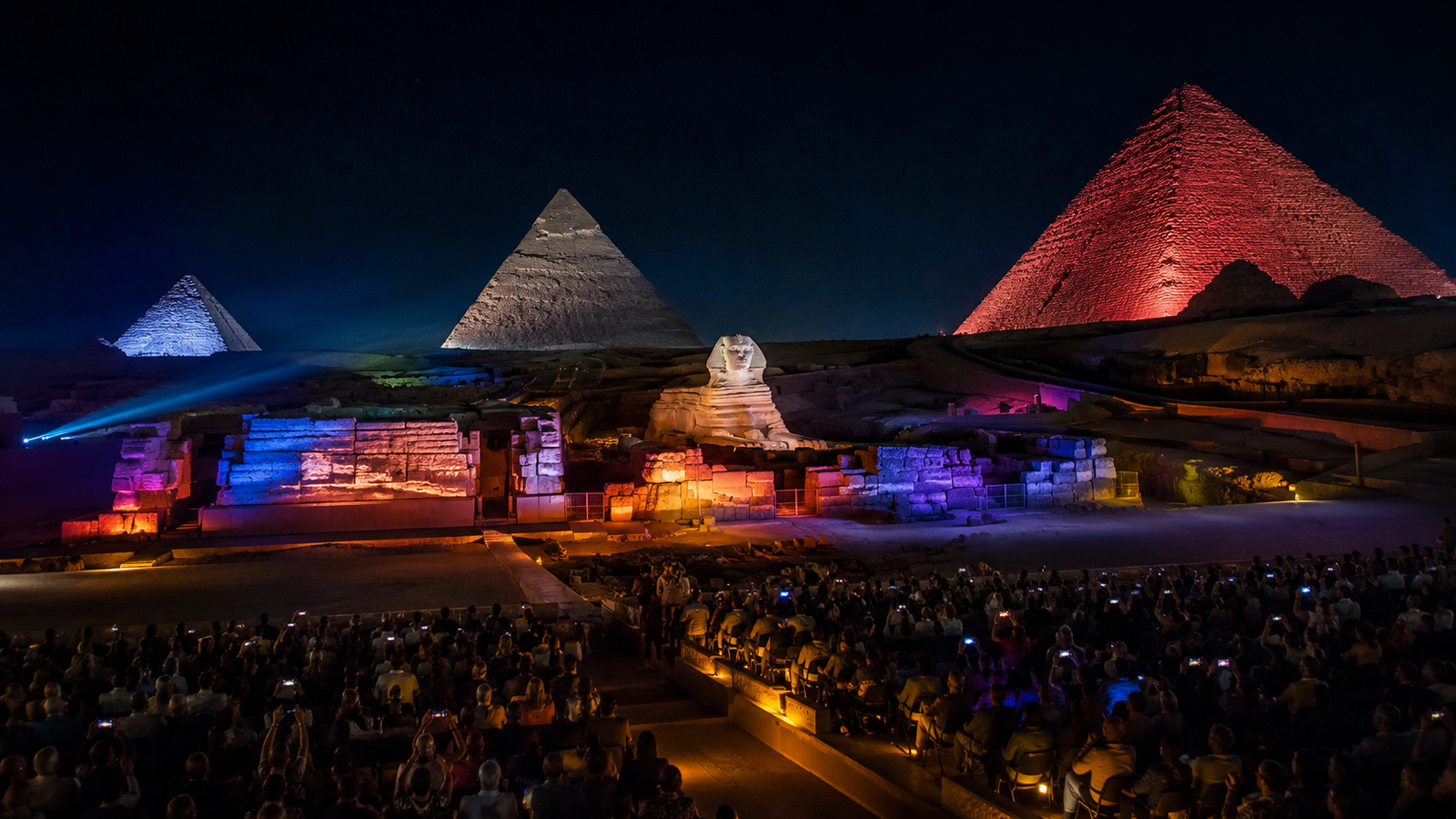
As the Egyptian sun sets and the sky above Giza turns from gold to deep blue, the Pyramids and the Great Sphinx are suddenly illuminated by colored lights, and a deep voice begins to narrate: “I am Cheops the Pharaoh. Once, thousands of years ago, my name was on the lips of all men…” The Sound and Light Show at the Giza Pyramids is one of Egypt’s most theatrical experiences — and after decades of operation, it remains one of Cairo’s most memorable evening entertainments.
This complete 2027 guide tells you everything about the show: what happens, how long it lasts, which languages are available, how to get tickets, the best seats, whether it’s worth it, and the practical logistics that make attending smooth.
For the daytime Pyramids experience, see our Giza Pyramids Complete Guide. For the nearby Grand Egyptian Museum, see our GEM Visitor Guide.
What Is the Sound and Light Show?
The Sound and Light Show at Giza was inaugurated in 1961 — making it one of the first major tourist sound-and-light productions in the world. The concept was revolutionary at the time: using colored floodlights to illuminate ancient monuments while a narrated soundtrack tells their story, creating a theatrical night-time experience at an archaeological site.
The Giza show uses the Pyramids and the Great Sphinx as its stage. Colored lights wash across the ancient stones in sequence — the Sphinx, the Great Pyramid, the second pyramid, the third — while the narration tells the story of ancient Egypt’s pharaohs, the building of the pyramids, and the history of the Sphinx.
The Sphinx speaks: A theatrical device unique to the Giza show is that the narration is spoken in first person by the Great Sphinx itself — “I am the Sphinx, older than history, mightier than time…” — creating an impression of the ancient monument itself telling its story.
Laser effects: Modern productions incorporate laser effects projected directly onto the pyramid faces — geometric patterns and hieroglyphic symbols traced in light across 4,500 years of stone.
Show Details
Location: Giza Pyramid Complex — the show takes place in the open-air amphitheater facing the Sphinx and the pyramids
Duration: Approximately 55–65 minutes
Languages: The official show page currently advertises the program in 10 languages. The language offered at a particular performance can vary, so check the live schedule before booking.
Schedule: Performance times vary by date and season. The official website publishes the live schedule and notes that dates are subject to change.
Current official prices:
- Regular ticket: US$20
- Child ticket, ages 6–12: US$11
- VIP ticket: US$26
How to Get Tickets
The most reliable option is to book through the official Sound & Light Egypt website, where you can check the live date, performance time, language and current ticket price before paying.
You can also arrange the show through your hotel or a tour operator. If you book through a third party, confirm that the quoted price includes the show ticket and any transport you need.
Egypt Travel Ways can arrange the Sound and Light Show as an optional part of a private Giza itinerary. Contact us to arrange.
The Experience: What to Expect
The Setting
You sit in a tiered open-air amphitheater facing east toward the Sphinx, with the three pyramids behind and around you. As darkness falls and the show begins, the entire ancient complex gradually illuminates — the scale of the Pyramids, which can be overwhelming even in daylight, takes on an entirely different quality in the dark.
The Narration
The show is narrated with significant theatrical drama — the kind of delivery that was standard for these productions in the 1960s and has been lovingly maintained ever since. The Sphinx speaks in stentorian tones; dramatic music underscores key moments; the lighting shifts to emphasize each pharaoh’s story.
Modern visitors sometimes find the production style charmingly retro — the narration has a cinematic grandeur that predates irony. Lean into it rather than resisting it, and the show is genuinely moving.
The Lighting
The production value of the lighting is the show’s greatest strength. Watching the Great Pyramid shift from deep blue to gold to burning orange as the narrative moves through different historical periods creates a genuinely dramatic effect. The Sphinx, lit from below and from the sides, looks genuinely different from its daytime appearance — more mysterious, more imposing.
Best Seats
The amphitheater has tiered seating that is theoretically divided into premium and standard areas. In practice, any seat provides a clear view of the Sphinx and the pyramids. The central seats offer the most symmetrical view; seats toward either side provide slightly different perspective on the pyramid relationship.
Arrive early — the best seats fill quickly, particularly for the English-language shows which attract the largest audiences.
Is the Sound and Light Show Worth It?
The honest assessment: The Sound and Light Show is not cutting-edge modern production. The narration is theatrical in an old-fashioned way; the script has been essentially unchanged for decades; the laser effects are relatively simple by modern standards.
Why it’s still worth doing: The Giza site at night, with the three pyramids illuminated in the dark desert sky and the Sphinx lit from below, is genuinely extraordinary — an experience that daytime visits cannot replicate. Even if the production style is dated, the setting is incomparable.
Verdict: Yes, worth doing — particularly for first-time visitors. The 55-minute show provides a different emotional and visual experience of the Pyramids that complements rather than duplicates the daytime visit.
Practical Tips
Check the live schedule before booking. The official site publishes current performance times and languages, and notes that dates are subject to change. Check the official Pyramids Sound & Light page.
Bring a jacket for evening shows. Even in the warm months, the Giza Plateau at night has a breeze. After sunset, temperatures drop noticeably.
Arrive 30–45 minutes early. The most popular shows (English, French) attract significant audiences and seats fill quickly.
Combine with a sunset Pyramids visit. The ideal sequence: arrive at the Panorama Point for sunset photographs of the Pyramids (approximately 5:00–6:00 PM), then proceed to the Sound and Light Show venue for the 6:30 PM show. This creates a complete evening experience.
External Resources
- Sound and Light Egypt Official Website — Current show schedules and language availability
- TripAdvisor — Giza Sound and Light Show — Recent visitor reviews
- Egypt Ministry of Tourism — Official information on Giza site events
15 People Also Ask Questions About the Sound and Light Show at the Pyramids
1. What is the Sound and Light Show at the Pyramids?
The Sound and Light Show at the Giza Pyramids is a nightly theatrical production that uses colored floodlights, lasers, and narration to tell the story of ancient Egypt’s pharaohs. The Great Sphinx “narrates” in first person, with music and lighting effects illuminating the three pyramids and Sphinx in sequence. It has been running since 1961 and is one of Cairo’s most established evening entertainment experiences.
2. How much do Sound and Light Show tickets cost?
As of 1 October 2026, the official website lists US$20 for a regular ticket, US$11 for a child ticket for ages 6–12, and US$26 for VIP. Check the live booking page before paying because prices can change.
3. How long is the Sound and Light Show at Giza?
The show lasts approximately 55–65 minutes.
4. What languages is the Sound and Light Show available in?
The official show page currently advertises 10 languages. The language used for a specific performance can vary, so check the live schedule before choosing your date.
5. What time does the Sound and Light Show start?
There is no single time that should be assumed for every date. The official site publishes the current schedule and notes that dates are subject to change. Check your selected date before traveling to Giza.
6. Is the Sound and Light Show worth it?
Yes — particularly for first-time visitors. While the production style is theatrical in an old-fashioned way, the experience of seeing the Pyramids and Sphinx illuminated at night from the amphitheater is genuinely extraordinary and provides a completely different experience from the daytime visit.
7. Where is the Sound and Light Show at Giza?
The show takes place in an open-air amphitheater at the Giza Pyramid Complex, facing east toward the Sphinx with the three pyramids behind and around you. Access is through the main Giza site entrance — separate from the standard daytime entry.
8. Can I combine the Sound and Light Show with a daytime Pyramids visit?
Yes — and this is recommended. Visit the Pyramids in the morning for the daytime experience, then return for the evening Sound and Light Show. The two visits are completely complementary — the daytime allows close exploration; the evening provides the theatrical illuminated experience. See our Giza Pyramids Complete Guide.
9. Is the Sound and Light Show available year-round?
Yes, with the exception of Ramadan, when the schedule is modified. Summer shows (June–August) run but the evening heat should be considered. The most comfortable season for evening viewing is October through April.
10. What should I wear to the Sound and Light Show?
Light, comfortable clothing appropriate for the season. In evenings from October through April, bring a light jacket or layer — temperatures drop after sunset at the Giza Plateau. In summer, a light shirt is sufficient but the evening still cools relative to the hot day.
11. Are there food and drink options at the Sound and Light Show?
Limited concessions are typically available near the amphitheater. Bringing your own water and snacks is practical. For dinner, many visitors eat before or after the show at restaurants near the Giza site or in Cairo.
12. Is the Sound and Light Show the same as the one at other Egyptian sites?
Sound and Light Shows also run at Karnak Temple in Luxor and at Philae Temple in Aswan — each with different content relevant to that site. The Karnak show uses the Sacred Lake as its central feature; the Philae show involves arriving by boat to the illuminated island. All three are worth experiencing if your itinerary includes the respective cities.
13. Can children attend the Sound and Light Show?
Yes — children generally enjoy the theatrical experience of the illuminated Pyramids and the dramatic narration. The show’s length (55 minutes) is manageable for children aged 6+. Younger children may find the wait and the dark setting challenging.
14. Is the Sound and Light Show at the Pyramids the best one in Egypt?
The Pyramids show benefits from the most dramatic setting — the scale of the illuminated Pyramids at night is unmatched. The Karnak show in Luxor is also extraordinary, with the Sacred Lake providing a beautiful reflective surface for the lights. The Philae show in Aswan is the most atmospheric, with the boat arrival to the illuminated island temple. All three are excellent in their specific settings.
15. Do I need to book in advance for the Sound and Light Show?
Advance online booking is sensible when the show is important to your itinerary because performance times and languages vary. Use the official schedule to confirm your selected date before arranging transport.
Book Your Sound & Light Show with Egypt Travel Ways
Egypt Travel Ways can arrange the Sound and Light Show as part of a combined Giza evening experience — including transport, tickets, and optional dinner nearby.
Contact Egypt Travel Ways today to book your Pyramids Sunset + Sound & Light Show Tour.