

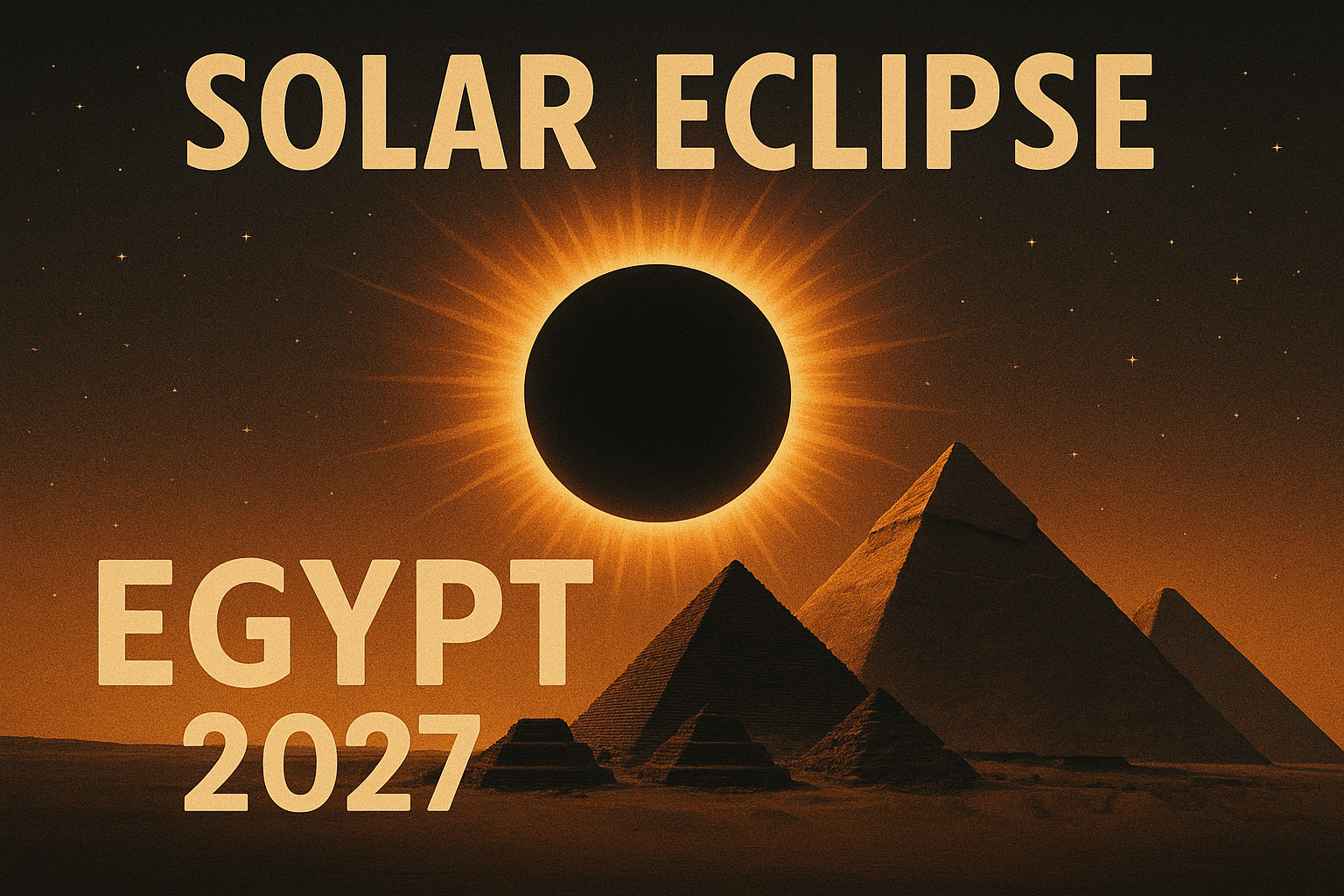
Solar Eclipse 2027 Egypt Safety Guide – Glasses, Heat, Cameras & Viewing Rules
Solar Eclipse 2027 Egypt Safety Guide: Glasses, Heat, Cameras & Viewing Rules
The August 2, 2027 total solar eclipse in Egypt requires two kinds of preparation: safe solar viewing and realistic travel planning in very hot summer conditions. The astronomical event is predictable, but eye safety, heat exposure, traffic, site access and camera setup all need to be planned before eclipse day.
This guide focuses on practical safety for travelers viewing the eclipse in Egypt, especially around Luxor and other locations inside the path of totality. For timings and destination planning, start with our Solar Eclipse Egypt 2027 complete guide and our Luxor eclipse timing and viewing guide.
1. Use Proper Eclipse Viewers During the Partial Phases
Never look directly at the uneclipsed or partially eclipsed Sun with ordinary sunglasses. Proper eclipse viewers should be designed for direct solar observation and intended to conform to the ISO 12312-2 standard.
Before eclipse day, inspect every viewer. Do not use a viewer that is visibly damaged, punctured, torn or badly scratched. Follow the manufacturer’s instructions and supervise children using solar viewers.
The safest approach is to have your viewers ready before the partial phase begins so there is no need to improvise with unsuitable materials.
2. Ordinary Sunglasses Are Not Eclipse Glasses
Dark sunglasses, stacked sunglasses, smoked glass, exposed film and improvised filters are not substitutes for proper solar viewers. The Sun remains dangerously bright during the partial phases even when most of its surface is covered by the Moon.
This distinction is especially important in Luxor because the partial phase lasts well over an hour before and after totality.
3. When Can You Remove Eclipse Glasses?
Only observers who are inside the path of totality can briefly view the fully eclipsed Sun without solar viewers. The viewers come off only after the bright photosphere is completely covered and totality has begun.
As soon as the bright Sun begins to reappear, solar viewers must go back on immediately. Travelers outside the totality path, including people remaining in Cairo or Aswan city, must keep proper solar protection in use for the entire eclipse because they will not experience a total phase.
4. Cameras, Binoculars and Telescopes Need Their Own Solar Filters
Do not look through a camera, binoculars or telescope at the partial Sun while wearing eclipse glasses alone. Magnifying optics concentrate sunlight and require a properly fitted solar filter mounted over the front of the optics.
Eclipse glasses are for direct visual viewing; they are not a substitute for a camera-lens or telescope filter.
Photographers should prepare their equipment before travel. Our Solar Eclipse 2027 Egypt Photography Guide covers camera filters, lenses, tripods, exposure planning and totality workflow.
5. Practice Filter Removal and Replacement Before Travel
Totality is not the time to learn a new camera workflow. Practice attaching and removing the lens filter, changing exposure settings and replacing the filter immediately after totality.
A rehearsed sequence reduces the risk of exposing equipment at the wrong time and also allows you to spend part of totality actually watching the sky rather than navigating camera menus.
6. Protect Yourself from Luxor’s August Heat
The 2027 eclipse reaches its most important phase around early afternoon, when Upper Egypt is extremely hot. Heat planning is therefore part of eclipse safety, not a secondary comfort issue.
Travelers should plan for:
- regular access to drinking water;
- shade wherever operationally possible;
- light, breathable clothing;
- a hat and strong sun protection;
- comfortable footwear;
- realistic limits on archaeological sightseeing before the viewing session.
If you are traveling with children, older guests or anyone who finds prolonged heat difficult, discuss transport, shade and waiting arrangements before confirming the program.
7. Do Not Overload Eclipse Morning with Sightseeing
August 2 is a fixed astronomical event. A temple visit can be shortened or moved; totality cannot. Eclipse-day itineraries should therefore protect the viewing window and keep non-essential sightseeing flexible.
For travelers staying in Luxor, arriving on August 1 and completing the main sightseeing before or after eclipse day creates a much safer buffer. Our 3-Day Luxor Solar Eclipse Tour 2027 follows this logic.
8. Arrive at the Viewing Area Early
Do not plan to reach the viewing site only minutes before totality. A responsible schedule allows time for traffic, checkpoints, parking, security procedures, walking to the final position, equipment setup, safety instructions and hydration.
The exact arrival target will depend on the confirmed viewing site and official event-day traffic plan. The key principle is to build a substantial buffer rather than rely on normal Luxor sightseeing-day journey times.
9. Viewing Location Must Be Confirmed, Not Assumed
A famous landmark is not automatically a suitable eclipse-viewing site. Archaeological sites may have restrictions on tripods, vehicle access, crowd capacity, operating hours or special-event use.
Do not rely on unconfirmed promises of “reserved positions at Karnak,” “exclusive temple access” or “guaranteed riverside viewing.” The final site should be selected according to confirmed access, clear sightlines, operating permissions, road logistics and location inside the path of totality.
For destination comparisons, see our best places to see the 2027 solar eclipse in Egypt.
10. Hurghada-to-Luxor Eclipse Travel Needs Extra Buffer Time
A normal Hurghada-to-Luxor excursion and an eclipse-day transfer are not the same operation. August 2, 2027 may involve heavier traffic, checkpoints, official restrictions and unusually large visitor numbers.
Egypt Travel Ways currently has two Hurghada-based formats:
- Luxor Solar Eclipse 2027 from Hurghada – Small Group Day Tour, with transport, an Egyptologist and flexible sightseeing.
- Luxor Solar Eclipse 2027 – Transport Only from Hurghada, focused on transport and eclipse-day logistics.
Both require much earlier departure planning than a routine Luxor day trip. For the normal route, see our Hurghada to Luxor guide.
11. A Nile Cruise Still Needs a Confirmed Totality Location
The 7-Day Nile Cruise & Solar Eclipse 2027 combines the event with Upper Egypt sightseeing, but the viewing location must still be confirmed inside the totality path. Our Nile Cruise Solar Eclipse 2027 planning guide explains the positioning and Aswan limitation in detail.
Aswan city itself is outside the path of totality, so a cruise ending in Aswan cannot simply assume that the eclipse can be viewed in totality from the city. The operating plan must position guests at an appropriate confirmed location.
12. Protect Camera Gear from Heat and Direct Sun
Long waits in August heat can affect batteries, screens and other electronics. Keep spare batteries and memory cards out of direct sun where practical, use shade for equipment when available, and avoid leaving camera bags in a closed vehicle exposed to intense sunlight.
Carry backups for essential items such as batteries, memory cards and filter attachment materials.
13. Avoid Trip Hazards Around Tripods and Equipment
A crowded viewing area may contain tripods, chairs, camera bags and cables. Keep equipment within your allocated space, avoid blocking walkways and make sure tripod legs are visible to people moving around you.
Arriving early helps photographers set up without creating unnecessary congestion just before totality.
14. Do Not Rely on Mobile Service for Every Detail
Large visitor numbers can put pressure on mobile networks. Before leaving your hotel, save the essential operating information you may need offline: pickup point, driver or tour contact, hotel details and any final viewing-site instructions supplied by the operator.
Group members should understand the meeting point and return procedure rather than relying only on messaging apps at the viewing site.
15. Weather Cannot Be Guaranteed
Egypt’s summer climate can be favorable for clear conditions, but no operator can guarantee cloud-free, haze-free or dust-free skies. A safe and well-organized trip can control transport, timing and viewing procedures; it cannot control the atmosphere.
Travelers should be cautious of any package that promises guaranteed visibility of the corona or guaranteed perfect weather.
16. Confirm What Your Eclipse Package Actually Includes
Before paying for non-refundable travel, confirm the specific hotel, transport, viewing arrangements and inclusions in writing. The four current Egypt Travel Ways eclipse products serve different travel styles:
- 7-Day Nile Cruise & Solar Eclipse 2027
- 3-Day Luxor Solar Eclipse Tour 2027
- Hurghada Small Group Eclipse Day Tour
- Hurghada Transport-Only Eclipse Option
You can compare all four on our Solar Eclipse Egypt 2027 tours and packages hub.
Eclipse Safety Checklist
- Proper solar viewers for every traveler.
- Front-mounted solar filter for any camera, telescope or binoculars used on the partial Sun.
- Water, hat and sun protection.
- Confirmed pickup time and meeting point.
- Final viewing coordinates or operator instructions.
- Charged phone and power bank.
- Camera batteries and memory cards if photographing.
- Comfortable footwear.
- Any personal medication needed during a long outdoor day.
- A plan to arrive well before totality.
Frequently Asked Questions
Can I use normal sunglasses to watch the eclipse?
No. Ordinary sunglasses are not suitable for direct solar viewing. Use proper eclipse viewers intended for solar observation.
Do I wear eclipse glasses during totality?
Inside the path of totality, viewers can be removed only while the Sun’s bright photosphere is completely covered. They must be replaced as soon as the bright Sun begins to return.
Do cameras need a solar filter?
Yes, during the partial phases. A properly fitted solar filter belongs over the front of the lens or optical instrument.
Can I use eclipse glasses as a camera filter?
No. Magnifying optics require their own correctly fitted front-mounted solar filter.
Is Luxor very hot during the eclipse?
Yes. The event takes place in August and maximum eclipse occurs around early afternoon, so hydration, shade and sun protection are important parts of the operating plan.
Is the final viewing location guaranteed to be a temple?
No. Temple access and eclipse-specific arrangements require confirmation. The final location should prioritize totality, safe access and workable event logistics.
Can weather be guaranteed?
No. Cloud, haze and dust remain natural variables.
Prepare Before Eclipse Day
The safest eclipse experience is the one that requires the fewest last-minute decisions. Confirm your transport, understand the viewing rules, test your solar filters and camera workflow, pack for extreme heat and reach the viewing area with time to spare.
Continue with the Luxor Solar Eclipse 2027 timing guide for local planning, or return to the main Egypt eclipse pillar guide for the complete country-wide overview.

Recent Posts

How to Plan a Nile Cruise for the 2027 Solar Eclipse in Egypt
Hurghada to Luxor Solar Eclipse 2027 – Guided Day Tour vs Transport Only
Where to Stay in Luxor for Solar Eclipse 2027 – East Bank vs West Bank
All Categories
- Abu Simbel
- Abu Simbel from Aswan
- Airport
- Articles
- Aswan
- Best Time to Visit Egypt
- cairo
- Coptic Cairo
- Desert & Oasis
- Dive into the Magic of Sharm’s Underwater World
- Egypt Honeymoon Guide
- Egypt Safari
- Egypt Tourist Scams
- Egypt Travel Budget
- Egypt Travel Planning
- Felucca Ride on the Nile
- Grand Egyptian Museum
- Honeymoon
- hot air balloon luxor egypt
- Hurghada
- Is Egypt Safe for Tourists
- Islamic Cairo Walking
- Karnak Temple
- Khan El Khalili Bazaar
- luxor egypt
- Nile Cruise
- Nubian Village Aswan
- old cairo
- pyramids giza
- Sharm El Sheikh
- Siwa Oasis
- Siwa’s Simplicity
- Solar Eclipse Egypt
- The White Desert A Dream Sculpted by Time
- The Wonders of Saqqara
- Transport
- tutankhamun treasures
- Uncategorized
- White Desert Egypt Safari