

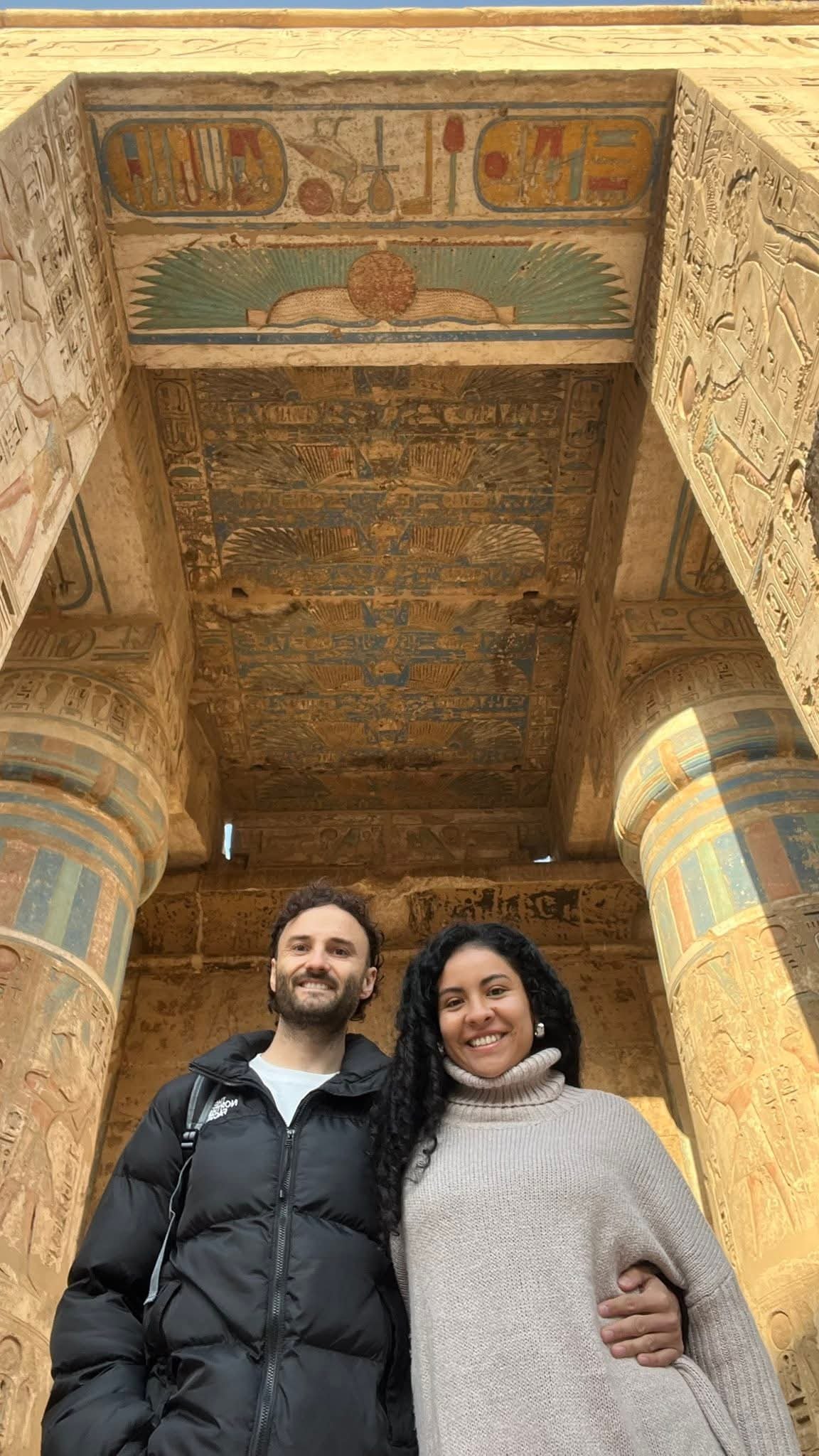
Valley of the Kings: Which Tombs to Visit and How to Plan Your Time
Most visitors should plan on two to three hours at the Valley of the Kings, starting as early as they can. A standard ticket usually covers a small number of open tombs, while the most famous ones often need an extra ticket. If you can add only one, choose Seti I for its decoration, Ramesses V and VI for a striking astronomical ceiling, or Tutankhamun for the history. Ticket options and open tombs change, so check them before you go.
What Is the Valley of the Kings?
This desert valley on Luxor’s West Bank was the royal burial ground of Egypt’s New Kingdom, from around the 16th to the 11th century BC. More than 60 tombs have been found here. Unlike the pyramids, these tombs were hidden in the rock, and their walls were painted with religious texts meant to guide the king through the afterlife.
Which Tombs Should You Choose?
| Tomb | Why visit | Good for |
|---|---|---|
| Seti I (KV17) | One of the longest and most finely decorated tombs | Art lovers with a bigger budget |
| Ramesses V and VI (KV9) | Famous astronomical ceiling showing the goddess Nut | A memorable extra ticket |
| Tutankhamun (KV62) | Small tomb, but it still holds the king’s mummy | History fans |
| Ramesses III (KV11) | Long tomb with unusual scenes in its side chambers | Standard-ticket visits, if open |
| Ramesses IV (KV2) | Easy access and well-preserved colors | Visitors who prefer less climbing |
| Thutmose III (KV34) | Early style, reached by a steep staircase | Confident walkers, if open |
How Tickets Usually Work
Tickets are normally bought at the site and sold by tomb group. The general ticket covers a set number of the tombs open that day, and tombs such as Tutankhamun, Seti I and Ramesses V and VI have usually been priced separately. Tombs are rotated to protect them, so a tomb on this list may be closed when you arrive. Check current prices and camera rules at the ticket office or with your guide.
Is Tutankhamun’s Tomb Worth It?
It depends on what you want. The tomb is small, and its treasures are no longer inside. Most of them are now displayed at the Grand Egyptian Museum, as covered in our article on the treasures of Tutankhamun. If you want to stand in the room Howard Carter opened in 1922, it is worth it. If you care more about wall paintings, Seti I or Ramesses V and VI may suit you better.
A Good West Bank Morning
- Start at the Valley of the Kings as soon as you can, before the heat and tour groups build up.
- Continue to the Temple of Hatshepsut at Deir el-Bahari.
- Stop briefly at the Colossi of Memnon on your way back.
With an early start, you can be finished by lunchtime and spend the afternoon on the East Bank. Our Karnak vs Luxor Temple guide helps you decide what to see next. If you want to start even earlier, read our hot air balloon guide.
Practical Tips
- Wear: comfortable shoes, a hat and sun protection, because there is little shade outside the tombs.
- Bring: water, and small notes for tips.
- Expect: steep ramps or stairs and warm, stuffy air in some tombs.
- Mobility: ask which open tombs have the easiest access, as they vary a lot.
- Guides: guides usually explain the tombs outside, so ask yours to talk you through the scenes before you go in.
See our Egypt packing list for more.
Understanding What You See Inside
The tombs make more sense once you know what the paintings were for. They were not decoration in the modern sense. Together, they formed a guide for the dead king, who was expected to travel through the underworld each night with the sun god Ra and be reborn at dawn.
You will often see scenes from a few important religious books:
- The Amduat: describes the twelve hours of the night, with each hour shown as a separate region of the underworld.
- The Book of Gates: shows the gates the sun god must pass, each one protected by a guardian.
- The Book of the Dead: a collection of spells to help the deceased in the afterlife.
- The Books of the Day and of the Night: show the sky goddess Nut swallowing the sun at dusk and giving birth to it at dawn.
Once you can spot these themes, the walls stop looking like endless rows of symbols. Ask your guide to point out the sun disk moving through each scene. It is an easy thread to follow from one chamber to the next.
How the Tombs Changed Over Time
Walking through tombs from different periods shows how royal burial design developed. Earlier tombs of the 18th Dynasty, like that of Thutmose III, often have a bent layout and are hidden high in the cliffs. Their decoration can look simple, with figures drawn almost like sketches on a pale background.
Later tombs from the 19th and 20th Dynasties tend to run in a straighter line, with long corridors leading to the burial chamber. Their carved and painted decoration became richer and covered more of the walls. If you visit one early tomb and one later tomb, the contrast is easy to see, even without much background knowledge.
A Closer Look at the Most Famous Tombs
Seti I (KV17)
Discovered by Giovanni Belzoni in 1817, this is one of the longest tombs in the valley, and its fine relief carving is often considered among the best in Egypt. It suits visitors who care most about art and do not mind paying more. Confirm whether it is open and what it costs before you plan around it.
Ramesses V and VI (KV9)
The tomb was begun for Ramesses V and later used for Ramesses VI. Visitors come mainly for the burial chamber ceiling, where the goddess Nut stretches across a dark background filled with stars and sun disks. It is a good choice if you want a single dramatic moment.
Tutankhamun (KV62)
Howard Carter found the entrance in November 1922, in work funded by Lord Carnarvon. The tomb is small for a king, which may mean it was not originally intended for him. Only the burial chamber is decorated, but this remains the most famous room in the valley.
Ramesses III (KV11)
Sometimes called the Tomb of the Harpers because of a scene showing two musicians, this tomb has small side chambers with unusual images of daily life and royal stores. Its length and variety make it a strong choice when it is open.
Ramesses IV (KV2)
This tomb has been visited since ancient times, and Greek and Coptic graffiti can still be seen on its walls. Its entry is relatively easy, which makes it useful for travelers who want to avoid steep steps.
Thutmose III (KV34)
Reaching this tomb means climbing a metal staircase up a narrow cleft, then descending inside. The walls show the Amduat in a simple style that feels very different from later tombs. It is a good choice for active travelers curious about the valley’s earlier period.
Who Built the Tombs?
The workers lived nearby in the village now known as Deir el-Medina. They were skilled quarrymen, plasterers, scribes and painters, and their records give a rare look at ordinary life in ancient Egypt, including work rotas, disputes and even an early labor strike. If you have extra time on the West Bank, the village and its small painted tombs make a rewarding addition.
Despite all the secrecy, almost every royal tomb was robbed in antiquity. Late in the New Kingdom, priests moved many royal mummies to hidden caches for protection. That is one reason so many of those kings were found together in the 19th century, and why Tutankhamun’s nearly intact burial caused such excitement.
Common Mistakes to Avoid
- Arriving late: by midday, the valley can feel very hot, particularly from May to September.
- Trying to see too much: two or three well-chosen tombs are usually more enjoyable than rushing through several.
- Assuming a tomb is open: the rotation can change, so keep a backup choice in mind.
- Ignoring the walk: the site has ramps, stairs and uneven ground, and tomb air can feel humid.
- Skipping the context: a good Egyptologist can turn the scenes into a story you can follow.
Is the Valley of the Kings Good for Children?
Older children often enjoy the idea of hidden tombs and treasure, especially if they have heard about Tutankhamun beforehand. Younger ones may tire quickly in the heat. Keep the visit short, bring water and snacks for the car, and choose tombs with easier access. Our Egypt family vacation guide has more ideas for planning around children.
Valley of the Kings FAQs
How many tombs can you see in one visit?
A general ticket has usually covered three tombs, with special tombs sold separately. Check what is currently offered when you buy your ticket.
How long do you need?
Plan for two to three hours, including the walk and time at the entrance. Add more if you plan to buy several extra tickets.
What is the best time of year to visit?
October to April is usually the most comfortable. In the hotter months, arrive as early as possible.
Can you take photos inside?
Rules have changed over the years, and some tombs may be treated differently. Ask at the ticket office before you enter, and avoid using flash.
Is it worth paying for extra tombs?
For most people, one extra tomb is enough. Choose it based on what you enjoy most: art, drama or the Tutankhamun story.
Visiting from Hurghada or as Part of a Longer Trip
You can see the valley in a long day from the Red Sea. Read our Luxor day trip from Hurghada guide or see our private Luxor day trip to the Valley of the Kings. It is also included on the 4-day Nile cruise from Aswan to Luxor and the 8-day Cairo, Aswan and Luxor tour.

Recent Posts
Dahabiya vs Nile Cruise: Which Should You Choose?
Valley of the Kings: Which Tombs to Visit and How to Plan Your Time
Tipping in Egypt (2026–2027): Guides, Drivers, Nile Cruises & Hotels
All Categories
- Abu Simbel
- Abu Simbel from Aswan
- Airport
- Articles
- Aswan
- Best Time to Visit Egypt
- cairo
- Coptic Cairo
- Desert & Oasis
- Dive into the Magic of Sharm’s Underwater World
- Egypt Honeymoon Guide
- Egypt Safari
- Egypt Tourist Scams
- Egypt Travel Budget
- Egypt Travel Planning
- Felucca Ride on the Nile
- Grand Egyptian Museum
- Honeymoon
- hot air balloon luxor egypt
- Hurghada
- Is Egypt Safe for Tourists
- Islamic Cairo Walking
- Karnak Temple
- Khan El Khalili Bazaar
- luxor egypt
- Nile Cruise
- Nubian Village Aswan
- old cairo
- pyramids giza
- Sharm El Sheikh
- Siwa Oasis
- Siwa’s Simplicity
- Solar Eclipse Egypt
- The White Desert A Dream Sculpted by Time
- The Wonders of Saqqara
- Transport
- tutankhamun treasures
- Uncategorized
- White Desert Egypt Safari